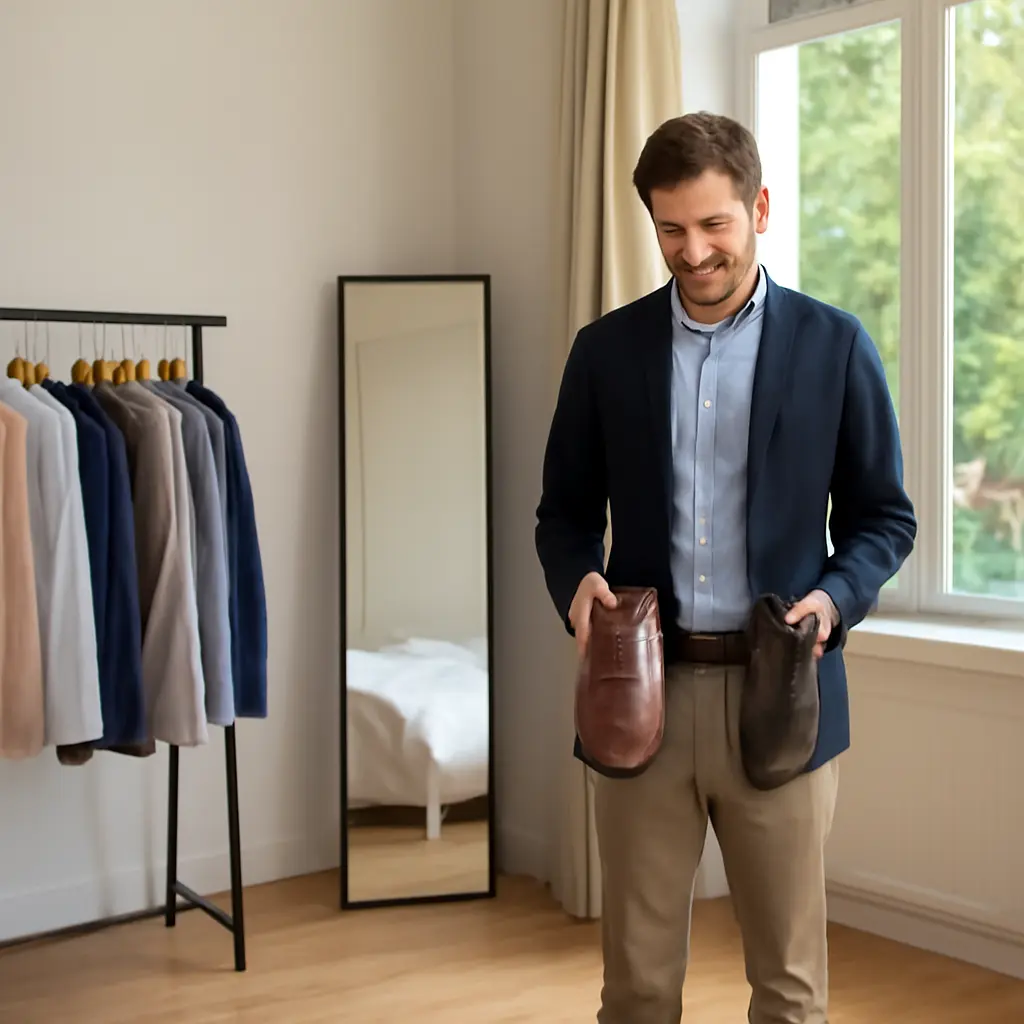
A versatile wardrobe is a small group of clothes that can be combined for different occasions without requiring a separate outfit for every setting. To move the same pieces from casual to elegant across the week, start with well-fitting essentials, then change the formality through shoes, layers, accessories, and grooming. This approach makes getting dressed simpler and can help reduce unnecessary purchases: the United Nations Environment Programme estimates that the fashion industry produces 2–8% of global greenhouse-gas emissions, while the U.S. Environmental Protection Agency reports that 11.3 million tons of textiles were landfilled in the United States in 2018. The practical guide below explains how to build adaptable combinations, tune them for different settings, and care for the pieces so they keep working.
Adaptable Wardrobe Pieces Create Casual-to-Elegant Outfits
An adaptable wardrobe piece is a garment or accessory that works in multiple outfits and settings because its color, cut, fabric, or detailing coordinates easily with other items. There is no single official definition for a “capsule wardrobe”; the term commonly describes a considered collection of versatile clothes intended to be worn in many combinations. The key idea is not a prescribed number of garments, but repeatable coordination.
The strongest candidates tend to have simple lines, comfortable fit, and colors that work together. A dark blazer, straight-leg trousers, a crisp shirt, a fine-knit sweater, and clean leather shoes can each support both relaxed and polished looks. These are examples, not a mandatory shopping list: climate, dress codes, personal style, and existing clothes should guide choices.
Core garments: the foundation for repeat outfits
Core garments are the frequently worn pieces that anchor several outfits. Consider a blazer with enough structure for a meeting but a comfortable fit for casual layering, trousers that work with a shirt or knit, and a plain top that can be worn alone or beneath another layer. Prefer items that fit well at the shoulders, waist, and hem; an otherwise versatile piece may stay unworn if it needs constant adjustment.
A useful test is whether a garment works with at least three items already in your closet. This is a practical styling rule rather than a research-backed universal threshold. Before buying, try combinations you would actually wear, including a relaxed option and a more formal one.
Color and fabric: coordination with texture
A coordinated palette makes pieces easier to recombine. Start with a few neutrals, such as navy, charcoal, cream, or brown, then add one or two colors you enjoy wearing. Texture and fabric help adjust the mood: a cotton shirt and denim feel relaxed, while a smooth wool trouser or refined knit usually reads as more polished. Fabric care matters, too; check labels before washing or ironing, because shrinkage, fading, and damage can shorten a garment’s useful life.
Once the core garments coordinate, the same outfit can shift noticeably through small substitutions. Shoes, outerwear, and accessories provide the easiest next step.
Styling Adjustments Shift the Same Pieces Between Dress Codes
Styling adjustments are changes to the way clothes are layered, accessorized, or finished that alter an outfit’s formality without replacing its main garments. The setting still matters: a workplace, dinner invitation, or event may have specific dress expectations, so adaptable clothing is not a substitute for checking the dress code.
Casual styling: relaxed layers and practical shoes
For a casual look, combine core pieces with comfortable footwear and easy layers. For example, wear straight-leg trousers, a plain shirt, and a fine-knit sweater with clean sneakers. A blazer can be worn open over a simple top, or left at home when the setting is informal. Keeping the fit intentional helps a relaxed outfit look deliberate rather than unfinished.
Smart-casual styling: balance structure and ease
Smart casual sits between everyday clothing and formal business wear, but its meaning varies by employer, venue, and region. A practical interpretation pairs one structured item with relaxed pieces: a blazer over a knit top, tailored trousers with low-profile shoes, or a neat shirt with dark jeans where denim is appropriate. When in doubt, follow the host’s or workplace’s guidance rather than relying on the label alone.
Elegant styling: refine the finish, not the whole wardrobe
An elegant version of a familiar outfit often comes from cleaner lines and considered finishing. Swap sneakers for polished shoes, add a belt that matches the footwear, choose a smooth outer layer, and keep accessories simple. Press or steam garments when their care instructions allow it, and check that hems, buttons, and collars are neat. These finishing choices can elevate a repeated outfit without requiring a new set of clothes.
For a real-world example, a shirt and trousers can serve as a base for a full day: wear them with sneakers and a casual jacket for errands, add a blazer for a workday, then change to polished shoes and a refined accessory for dinner. The garments remain largely the same; the styling signals the change in occasion.
A Weekly Outfit Plan Makes Repeat Pieces More Useful
A weekly outfit plan is a simple sequence of combinations prepared around likely activities, weather, and laundry needs. It reduces last-minute decisions and makes it easier to identify which garments genuinely earn their closet space. No particular planning method is required: a note on your phone or a short list is enough.
Example: one set of pieces across five days
The following example uses a blazer, trousers, shirt, fine-knit sweater, dark jeans, and two pairs of shoes. Adjust the choices for local weather and dress codes.
- Monday: trousers, shirt, and blazer with polished shoes for a more formal day.
- Tuesday: the same trousers with the sweater and comfortable shoes for a relaxed workday.
- Wednesday: dark jeans, shirt, and blazer for smart casual, if denim suits the setting.
- Thursday: trousers and shirt without the blazer, adding a practical layer for commuting.
- Friday: jeans and sweater with clean sneakers for a casual finish.
This is a planning illustration, not a claim that every person needs the same number of pieces or outfit changes. A chart can make the method easier to adapt: list garments down one side and occasions across the top, then mark which combinations work. Gaps become visible before you shop.
Shopping and care: extend the value of each piece
Before purchasing, consider fit, comfort, care requirements, and whether the item coordinates with clothes you already own. The U.S. Environmental Protection Agency’s latest cited national municipal-solid-waste data report 11.3 million tons of textiles landfilled in 2018. That figure describes U.S. disposal, not the impact of any one wardrobe, but it provides context for choosing durable items and keeping usable garments in circulation.
Care is part of versatility: follow the garment label, mend loose buttons or small seams, and store clothes in a way that protects their shape. When an item no longer suits you, consider repair, resale, donation, or textile recycling where available. The EPA notes that reuse and recycling are among the ways to reduce the amount of material sent for disposal.
Conclusion: Build Casual-to-Elegant Outfits from What You Own
Adaptable wardrobe pieces provide the foundation; coordinated colors and practical fabrics make them easy to combine; and styling adjustments move the same garments between casual, smart-casual, and elegant settings. A short weekly plan helps turn those ideas into outfits while revealing what you already have and what, if anything, is genuinely missing. Start by selecting a few pieces from your closet, testing them in three different combinations, and planning care and repairs before buying replacements. For more context, consult the United Nations Environment Programme’s work on sustainability and the EPA’s textile-waste resources.
Sources: United Nations Environment Programme, “UN Alliance For Sustainable Fashion addresses damage of ‘fast fashion’,” https://www.unep.org/news-and-stories/press-release/un-alliance-sustainable-fashion-addresses-damage-fast-fashion; U.S. Environmental Protection Agency, “Textiles: Material-Specific Data,” https://www.epa.gov/facts-and-figures-about-materials-waste-and-recycling/textiles-material-specific-data; U.S. Environmental Protection Agency, “Reducing and Reusing Basics,” https://www.epa.gov/recycle/reducing-and-reusing-basics