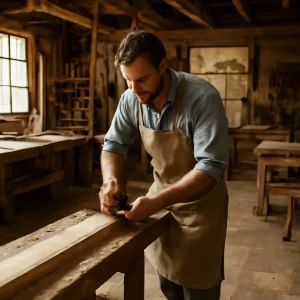
Ancient craft techniques—from Japanese urushi lacquer and Korean rammed-earth building to natural indigo dyeing and hand-forged iron—are finding new life in contemporary studios, conservation projects, and low-impact construction. These practices combine skilled handwork with close knowledge of local materials; today, their revival is driven by cultural preservation, repairability, and interest in alternatives to resource-intensive production. UNESCO’s living-heritage framework recognizes traditional craftsmanship as knowledge passed between generations, while modern projects show how these methods can be adapted without treating them as mere historical curiosities.
Traditional craft revival preserves knowledge through practice
A traditional craft technique is a learned way of making or repairing objects and structures using established materials, tools, and processes. UNESCO describes traditional craftsmanship as one of the domains of intangible cultural heritage, emphasizing that the safeguarding priority is the knowledge and skill—not simply the finished artifact. That distinction matters: a museum can preserve a vessel, but keeping the craft alive requires people who can make, teach, adapt, and use it.
The revival spans distinct practices, including natural-fiber weaving, plant-based dyeing, lacquer repair, timber joinery, earthen construction, and blacksmithing. They share a reliance on trained observation and material behavior, yet each responds to its own ecology and history. The International Labour Organization has estimated that cultural and creative industries account for 3.1% of global gross domestic product and 6.2% of employment; those broad figures are not specific to traditional crafts, but they underscore the economic stakes of sustaining creative skills and livelihoods.
Craft knowledge is more than a recipe
Tacit knowledge is expertise acquired through practice—such as judging clay moisture by touch or knowing when a lacquer layer is ready for the next application. UNESCO’s 2003 Convention for the Safeguarding of the Intangible Cultural Heritage calls for transmission through formal and nonformal education, as well as measures that support the communities and practitioners who carry traditions forward. Documentation can help, but it cannot fully substitute for apprenticeship and repeated work with materials.
Revival can support repair and local economies
A craft revival is strongest when it creates a continuing role for practitioners, rather than extracting designs or techniques without community participation. Repair traditions can extend the useful life of objects, while local materials may reduce reliance on distant supply chains. Results depend on the material, transport, energy use, and working conditions involved; “traditional” does not automatically mean environmentally preferable. Life-cycle assessment and fair payment help test those claims.
Natural dyeing brings plant knowledge back to textiles
Natural dyeing uses colorants derived from plants, insects, or minerals, often with mordants that help bind color to fibers. The Smithsonian’s National Museum of Natural History describes indigo as a dye obtained from plants and notes that its characteristic blue develops through a process involving reduction and oxidation. This chemistry—rather than simply soaking cloth in blue liquid—helps explain why traditional indigo dyeing requires careful control of vats, fiber, and air exposure.
Indigo fermentation and vat dyeing
In an indigo vat, the insoluble blue pigment is converted into a soluble form that can penetrate fiber. Once fabric is removed and exposed to oxygen, the dye oxidizes and turns blue. Repeated dips can build deeper shades, and slight differences in vat condition or handling produce characteristic variation. Contemporary makers are adapting these methods for small-batch textiles, workshops, and design collections, while researchers and dyers continue to examine how water use, mordants, and cultivation affect environmental performance.
Natural color is not automatically impact-free
Plant-derived dyes can reconnect textile production with regional growing knowledge, but they still require land, water, processing, and sometimes metal salts or other mordants. A useful revival therefore includes transparent sourcing and safe wastewater management. The Ellen MacArthur Foundation has highlighted textile production and use as major contributors to resource consumption and waste; its circular-economy approach supports durability, reuse, and recycling alongside experimentation with alternative materials. Traditional dyeing is most relevant when it contributes to a broader shift toward longer-lived garments and responsible production.
Lacquer traditions keep repair skills in circulation
Urushi is a natural lacquer made from the sap of lacquer trees, applied in thin layers to protect and decorate objects. Japan’s Agency for Cultural Affairs describes urushi craft as a specialized tradition involving material preparation, application, and finishing. Because each layer must be carefully applied and cured, the work depends on patience, controlled conditions, and years of hands-on training.
Kintsugi makes repair visible
Kintsugi is a Japanese repair practice that joins broken ceramics with lacquer and may highlight the repaired seams with metal powder. It is often presented as a philosophy of honoring an object’s history, but it is also a demanding technical process: lacquer must cure properly, fragments must align, and repaired vessels may not be suitable for every use. Contemporary artists and restorers use the method to challenge disposable design, while conservation professionals distinguish artistic repair from treatments intended to preserve an object’s original condition.
Training sustains the material expertise
Reviving lacquer work requires more than popular interest in the finished look. Practitioners need access to appropriate sap, safe workshops, tools, and opportunities to learn under experienced makers. The Japanese government’s designation system for important intangible cultural properties recognizes individual and group bearers of traditional skills, an approach that makes transmission and practitioner support visible parts of heritage policy.
Earthen building adapts ancient materials to modern needs
Earthen construction uses soil-based materials—such as adobe, cob, rammed earth, or compressed earth blocks—to form walls and other building elements. The United Nations Environment Programme reports that buildings and construction account for roughly 37% of global energy- and process-related carbon dioxide emissions, including emissions from building operations and materials. That figure does not mean earthen buildings are automatically low-carbon, but it helps explain renewed interest in construction methods that can use local soil and require less industrial processing.
Rammed earth and compressed earth blocks
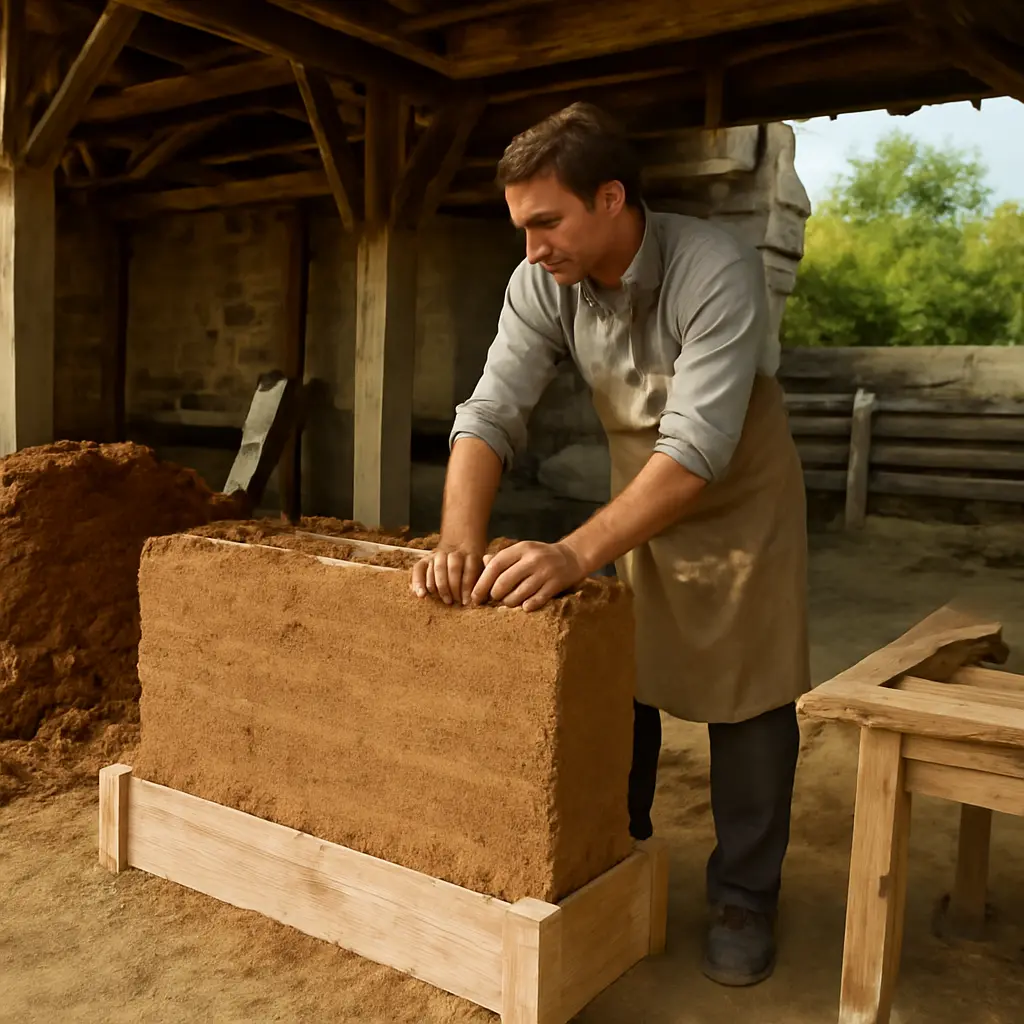
Rammed earth is made by compacting damp soil in a formwork, while compressed earth blocks are pressed into units and assembled as masonry. Their performance depends on soil composition, wall design, moisture protection, and structural detailing. Contemporary architects combine these methods with engineering standards and testing, rather than assuming that historical precedent alone guarantees safety. In suitable climates, thick earth walls can moderate indoor temperature swings, although insulation, heating, cooling, and local code requirements still determine a building’s overall performance.
Heritage construction can inform climate-conscious design
The revival of earthen building is not simply a return to older houses. It involves adapting proven material knowledge to present-day needs, including seismic design, accessibility, moisture control, and reliable supply. The Global Status Report for Buildings and Construction from the United Nations Environment Programme tracks the sector’s substantial climate footprint and calls for action across materials, energy efficiency, and building practices. Earthen techniques are one possible part of that transition when local conditions and whole-life impacts support their use.
Hand forging reconnects metalwork with skilled making
Blacksmithing shapes heated metal with hammers, anvils, and other tools. Unlike mass production, hand forging lets a maker respond directly to the metal’s temperature and behavior, creating tools, fittings, decorative work, and architectural details. The craft persists in restoration, bespoke fabrication, and teaching workshops, where practical knowledge of heat, force, and sequence is passed on through demonstration and supervised practice.
Forging for restoration and contemporary design
Traditional forging is particularly useful when historic buildings or objects need components that cannot be replaced by standard parts. A smith can reproduce a hinge, bracket, or tool while matching its dimensions and character. Modern makers also use forging to create new work that combines traditional shaping with contemporary design. The revival is most sustainable when commissions support skilled trades and when material choices, workshop energy, and durability are considered alongside appearance.
Conclusion: ancient craft techniques need living communities
Natural dyeing, urushi lacquer, earthen construction, and hand forging show why ancient craft techniques are being brought back: they preserve specialized knowledge, offer approaches to repair and material efficiency, and create meaningful work. Their value rests not only in historical authenticity but in whether practitioners can teach the skills, earn a livelihood, and adapt them responsibly. Readers can support the revival by learning from qualified makers, choosing repair over replacement where appropriate, and seeking projects that credit and fairly compensate the communities behind the techniques. For further study, explore UNESCO’s intangible cultural heritage resources and national museums’ collections on traditional materials and making.
Sources: UNESCO, Traditional Craftsmanship, https://ich.unesco.org/en/traditional-craftsmanship-00057; UNESCO, Convention for the Safeguarding of the Intangible Cultural Heritage, https://ich.unesco.org/en/convention; International Labour Organization, The Future of Work in the Arts and Entertainment Sector, https://www.ilo.org/; Smithsonian National Museum of Natural History, Indigo, https://naturalhistory.si.edu/; Ellen MacArthur Foundation, A New Textiles Economy: Redesigning Fashion’s Future, https://ellenmacarthurfoundation.org/a-new-textiles-economy; Agency for Cultural Affairs, Government of Japan, Intangible Cultural Heritage, https://www.bunka.go.jp/english/; United Nations Environment Programme, Global Status Report for Buildings and Construction, https://www.unep.org/resources/report/global-status-report-buildings-and-construction