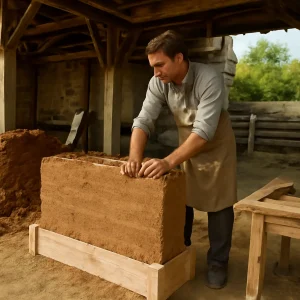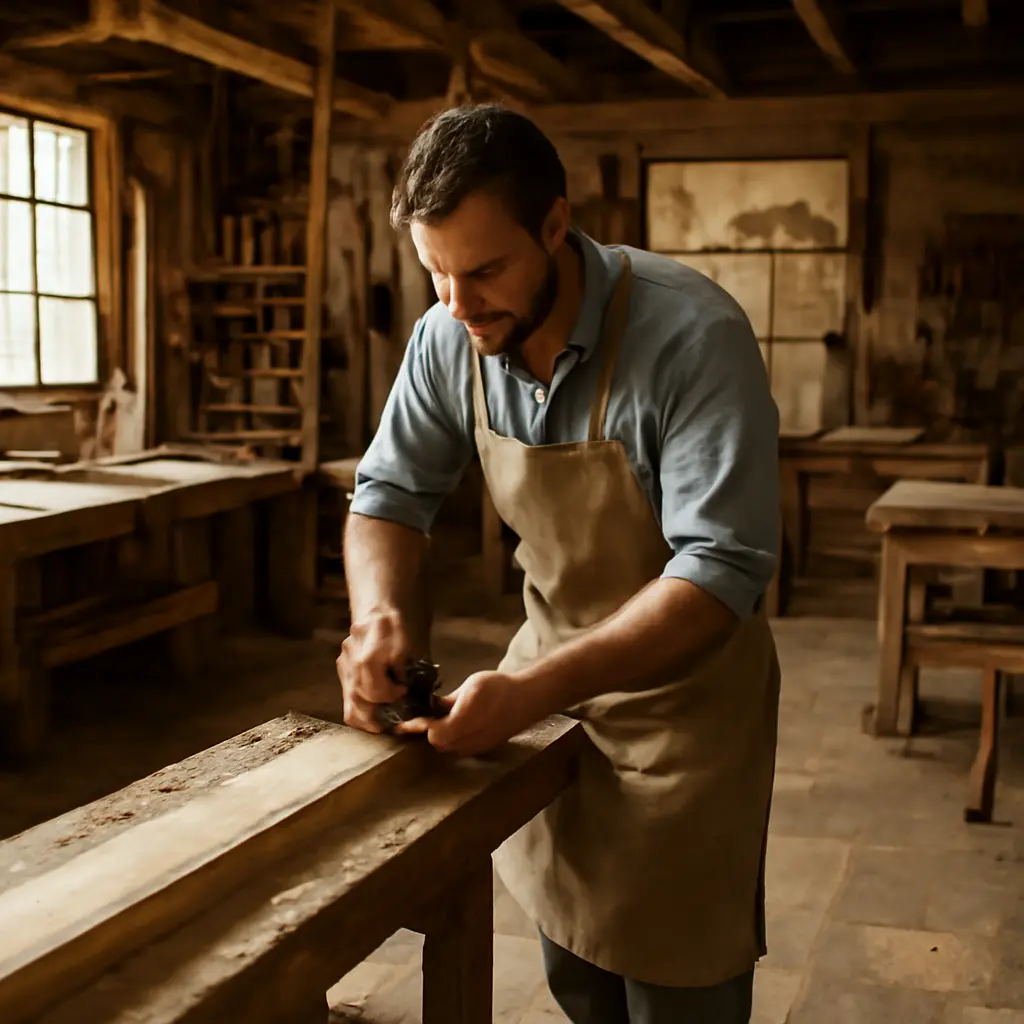
Master craftspeople’s guarded techniques are specialized ways of making, repairing, and finishing objects that are learned through practice and close observation, rather than fully captured in written instructions. Some are not truly lost: they survive in workshops, guilds, and cultural traditions, but remain vulnerable as experienced practitioners retire and fewer apprentices enter the trades. UNESCO reports that traditional craftsmanship is among the domains of intangible cultural heritage, while the U.S. Bureau of Labor Statistics projects employment for craft and fine artists to grow just 4% from 2023 to 2033, underscoring the pressures on specialist knowledge. From Japanese wood joinery and Venetian glassmaking to hand-wrought metalwork and conservation repair, these methods preserve material knowledge that machines and manuals cannot easily replace.
Why master craftspeople guard specialized techniques
A craft technique is a learned sequence of decisions and actions that transforms materials into a useful or expressive object. The Smithsonian Center for Folklife and Cultural Heritage describes traditional craft as knowledge transmitted through practice and community, not simply as a finished product. A technique may be protected because it is commercially valuable, culturally significant, difficult to reproduce, or dependent on tacit judgment built over years.
“Guarded” does not always mean secret. In many traditions, practitioners share knowledge selectively, teach it within families or workshops, or reserve certain stages for people who have demonstrated competence. The distinction matters: safeguarding a tradition can require passing it on, while protecting a livelihood may encourage a maker to keep a distinctive process proprietary.
Tacit knowledge: the judgment that instructions cannot capture
Tacit knowledge is practical understanding that is hard to express fully in words. A potter may judge clay moisture by touch; a blacksmith may read color to estimate heat; a woodworker may listen to a plane as it cuts. These observations guide small adjustments that determine whether a material bends, cracks, tears, or finishes cleanly.
This explains why a recipe or video is often insufficient. The same technique behaves differently with changes in humidity, material source, tool condition, and scale. Apprentices learn by repeating a task, receiving correction, and comparing results—an approach consistent with UNESCO’s description of intangible heritage as knowledge and skills passed between generations.
Trade secrets, cultural protocols, and intellectual property
A trade secret is commercially valuable information kept confidential, such as a workshop’s finishing formula or a distinctive production sequence. Cultural protocols are different: they govern who may learn, perform, or share knowledge tied to a community’s identity and responsibilities. Neither category should be confused with a universal ban on teaching; each reflects a particular relationship between knowledge, ownership, and use.
The World Intellectual Property Organization notes that traditional cultural expressions and traditional knowledge can be difficult to protect through conventional intellectual-property systems, which are generally designed around identifiable owners and limited terms. Responsible documentation therefore involves consent, attribution, and agreement about access—not simply recording a process and publishing it.
Traditional craft techniques preserve material intelligence
Material intelligence is the accumulated ability to understand how a substance behaves and to adapt a process accordingly. Its hyponyms include joinery, hot-glass shaping, forging, natural dyeing, and hand finishing. These methods are linked by a common principle: the maker responds continuously to the material rather than treating production as a fixed sequence of machine settings.
Japanese timber joinery and repair
Japanese timber joinery connects pieces of wood through precisely cut interlocking forms, often reducing or eliminating the need for metal fasteners. A skilled carpenter must account for grain direction, wood movement, fit, and the forces the joint will bear. The method is not one single secret joint but a broad family of solutions adapted to a structure and its materials.
The Agency for Cultural Affairs of Japan recognizes traditional building craftsmanship as part of the country’s cultural heritage. At Ise Jingu, the shrine’s buildings are ceremonially reconstructed on a roughly 20-year cycle, a practice that renews both the structures and the skills required to build them. The example shows how a living institution can preserve techniques by creating repeated opportunities to practice them.
Venetian glassmaking and hot-shop judgment
Venetian glassmaking includes furnace-based techniques in which makers gather molten glass, shape it with tools, and coordinate reheating with movement. Timing and temperature are critical: glass cools as it is worked, while uneven cooling can create stress or defects. The maker’s ability to read the material’s color, viscosity, and response is a central part of the process.
UNESCO inscribed the traditional art of glass beads in Venice on its Representative List of the Intangible Cultural Heritage of Humanity in 2020. The tradition illustrates why transmission requires more than preserving tools or recipes: apprentices need access to working furnaces, experienced mentors, and enough practice to develop reliable judgment.
Blacksmithing and heat control
Blacksmithing shapes heated metal by hammering, bending, punching, and drawing it. The craftsperson manages heat, force, and timing together; too little heat can make steel difficult to work, while excessive heat can damage it. The exact response also depends on the alloy and the intended object, so a smith’s experience informs decisions that a general instruction cannot settle.
Modern industrial forging can produce components at scale, but hand forging remains useful for restoration, bespoke work, and situations where a maker must adapt a repair to an existing object. Historic-building conservation is one example: replacing a fitting with a hand-made match may preserve compatibility with original dimensions and construction.
Natural dyes and finishing rely on controlled variation
Dyeing and finishing techniques alter an object’s color, surface, or resistance to wear. Their shared challenge is variability: results can change with water chemistry, temperature, material preparation, and the source or age of ingredients. Experienced makers manage that variation through testing and observation rather than expecting every batch to behave identically.
Natural dyeing and the knowledge of place
Natural dyeing uses colorants from plants, insects, minerals, or other natural sources, often with a mordant that helps bind color to fibers. Practitioners must understand how fiber type, extraction, acidity, and heating affect the final shade and durability. A dye bath may be altered by seasonal conditions or local water, making place-based experience especially valuable.
UNESCO’s 2022 inscription of traditional knowledge and skills related to the making of Uzbek ikat recognizes a textile practice in which dyeing and weaving knowledge are transmitted across generations. Such traditions demonstrate that a technique is rarely an isolated trick: it belongs to a wider system of tools, designs, vocabulary, and social learning.
Hand finishing and conservation repair
Hand finishing includes scraping, burnishing, polishing, and applying protective coatings to achieve a particular surface. In conservation, the goal is not always to make an object look new. Conservators assess the material, document its condition, and choose a treatment that limits damage while respecting the object’s history.
The American Institute for Conservation’s professional guidance emphasizes examination, documentation, and careful treatment. Traditional craft skills can be essential to this work: a conservator may need to understand historic adhesives, metalworking, textiles, or wood finishes to recognize how an artifact was made before deciding how to stabilize it.
Why these techniques are at risk—and how they survive
A technique can decline even when demand for its products remains. Long training periods, costly tools and materials, low or unpredictable income, and limited access to apprenticeships can make a craft difficult to sustain. Industrial substitutes may also reduce the number of commissions that allow experts to practice rare methods regularly.
The workforce and training challenge
The U.S. Bureau of Labor Statistics projects 4% employment growth for craft and fine artists between 2023 and 2033, approximately in line with the average projected growth across occupations. This broad category does not measure every specialist trade, and it cannot by itself show whether a particular tradition is thriving. It does, however, illustrate why preservation depends on stable routes into skilled work rather than cultural recognition alone.
Effective transmission combines demonstration, supervised repetition, and gradual responsibility. Digital recordings can supplement this process by preserving terminology or documenting a tool sequence, but they cannot provide the pressure, timing, and corrective feedback of working alongside an experienced craftsperson.
Documentation that respects practitioners
Documentation is most useful when makers decide what should be recorded, who may access it, and how it may be reused. A community may choose to publish basic history while keeping certain designs, ceremonies, or production stages restricted. Museums, researchers, and businesses can support continuity by obtaining informed consent, crediting knowledge holders, and creating benefits for the people who sustain the practice.
For readers and buyers, a practical response is to seek out workshops that teach, commission repairs instead of replacing durable objects, and ask makers how their work is produced. Those choices help sustain the conditions in which specialized techniques can be practiced and passed on.
Conclusion: keeping guarded craft knowledge alive
Master craftspeople’s techniques are not merely hidden recipes; they are forms of tacit knowledge shaped by materials, communities, and repeated practice. Japanese joinery, Venetian glassmaking, blacksmithing, natural dyeing, and conservation finishing show how expert judgment connects a process to its place and purpose. These skills face pressure from changing labor markets and training barriers, even as cultural institutions and working traditions help sustain them.
Preserving craft does not mean demanding that every method be made public. It means supporting fair apprenticeships, respecting cultural protocols, documenting knowledge with consent, and creating real opportunities for skilled makers to work. To learn more, explore UNESCO’s intangible cultural heritage resources and visit a local craft workshop or conservation organization.
Sources: UNESCO, Traditional craftsmanship, https://ich.unesco.org/en/traditional-craftsmanship-00057; UNESCO, Traditional art of glass beads in Venice, https://ich.unesco.org/en/RL/traditional-art-of-glass-beads-in-venice-01591; UNESCO, Traditional knowledge and skills related to the making of Uzbek ikat, https://ich.unesco.org/en/RL/traditional-knowledge-and-skills-related-to-the-making-of-uzbek-ikat-01879; U.S. Bureau of Labor Statistics, Craft and Fine Artists, https://www.bls.gov/ooh/arts-and-design/craft-and-fine-artists.htm; Smithsonian Center for Folklife and Cultural Heritage, The Smithsonian Folklife Festival, https://folklife.si.edu/; World Intellectual Property Organization, Traditional Knowledge, https://www.wipo.int/tk/en/; Agency for Cultural Affairs, Government of Japan, Cultural Properties, https://www.bunka.go.jp/english/; American Institute for Conservation, Code of Ethics and Guidelines for Practice, https://www.culturalheritage.org/about-conservation/code-of-ethics.