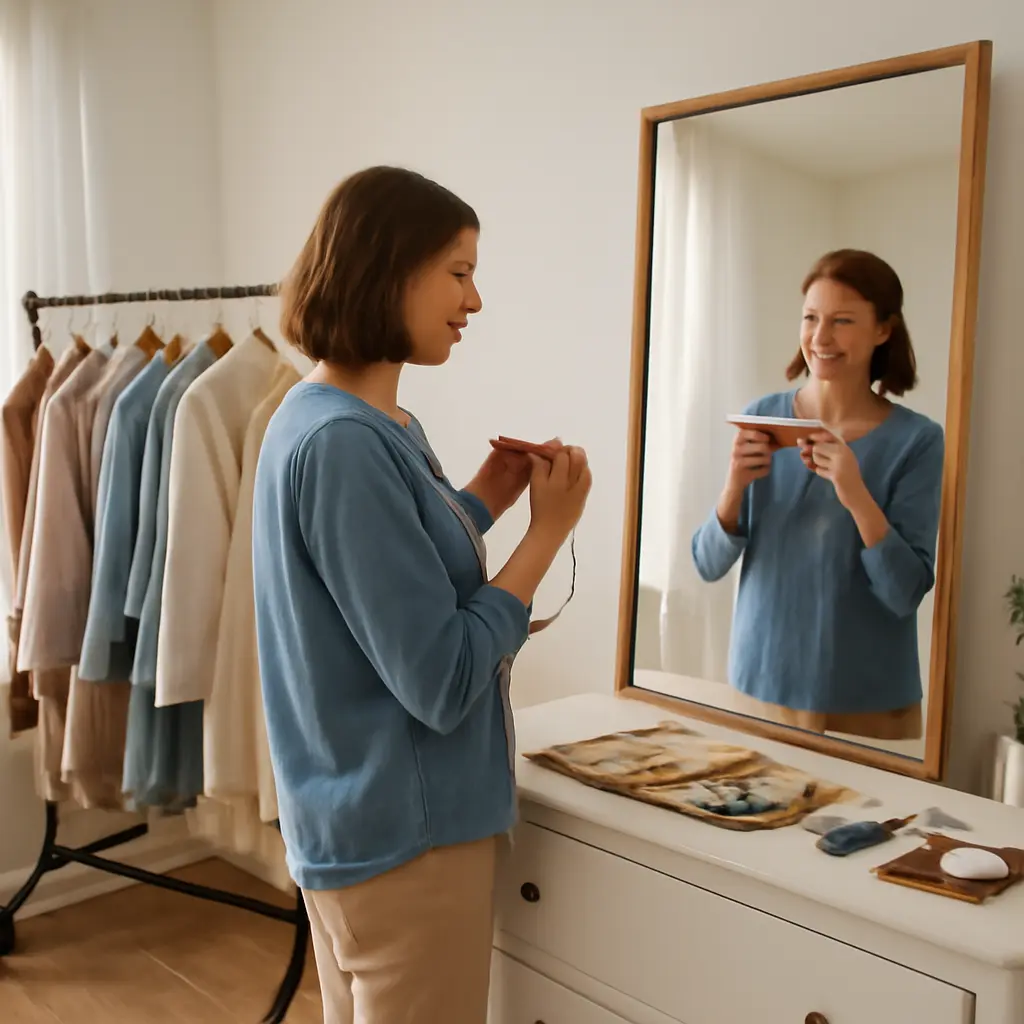
Beaded accessories—jewelry and other wearable items decorated with beads—can add color, texture, and personal meaning to everyday outfits. Styling them well is less about following rigid rules than balancing scale, color, comfort, and care. Five common missteps are wearing too many competing pieces, overlooking proportion, treating color as an afterthought, ignoring practical comfort, and neglecting maintenance. These details matter because accessories sit close to the body and are repeatedly exposed to movement, skin oils, moisture, and friction; the U.S. Geological Survey notes that water can carry dissolved substances, while the American Academy of Dermatology advises removing jewelry that irritates the skin.
Daily styling mistakes and beaded accessory balance
There is no universal formula for how many beaded accessories to wear. A useful definition of styling balance is the intentional coordination of an accessory’s visual weight, colors, placement, and function with the rest of an outfit. The Costume Institute at The Metropolitan Museum of Art documents how jewelry has served both decorative and cultural purposes across eras, a reminder that beads can be more than visual accents. For everyday dressing, however, clarity and comfort are practical measures of success.
Mistake 1: Layering too many statement pieces
Over-accessorizing happens when several bold items compete for attention—for example, a large beaded necklace, stacked bracelets, oversized earrings, and a decorated headband all worn together. Each piece may be attractive on its own, but a crowded combination can make the outfit feel visually noisy and may cause pieces to tangle or catch on clothing.
Choose one focal piece, such as a prominent necklace or a colorful pair of earrings, then let smaller accessories play a supporting role. If you want to layer necklaces or bracelets, vary their lengths or sizes so the pieces are distinguishable. This is a styling guideline, not a research-backed numerical rule: there is no authoritative study establishing an ideal daily count of beaded accessories.
Mistake 2: Ignoring proportion and placement
Proportion means how an accessory’s size and visual weight relate to the wearer, clothing, and location where it sits. A long, heavy necklace may compete with a high neckline; small beads can disappear against a busy print; and a bracelet stack may interfere with a watch or sleeve.
Match the accessory’s scale to the outfit’s lines. Short necklaces often work naturally with open necklines, while longer strands can provide contrast over simpler tops. For bracelets, check that the stack can move without pressing into the wrist or catching on cuffs. These adjustments make the beads easier to notice without making them dominate every outfit.
Mistake 3: Treating color and pattern as an afterthought
Color coordination is the process of considering how bead colors interact with clothing, skin, and other accessories. A common mistake is matching every color exactly or combining several vivid patterns and bead palettes without a visual anchor. The result can look accidental rather than intentional.
Try repeating one color from a print in the beads, or use a single bright accessory against neutral clothing. For a patterned outfit, beads in a solid, quieter color can provide contrast; for a plain outfit, a multicolored strand can become the focal point. The Color Association of the United States provides professional color research and forecasting, but everyday outfit coordination remains a matter of preference rather than a fixed scientific formula.
Comfort and care in daily beaded accessory use
Once an outfit looks balanced, practical wearability matters just as much. The same bead strand that works for a short outing may be unsuitable for exercise, a long commute, or a day involving frequent handwashing. Material, fit, fastening, and cleaning all affect whether an accessory remains comfortable and presentable.
Mistake 4: Overlooking comfort, fit, and skin sensitivity
Comfort mistakes include wearing a necklace that pulls, bracelets that slide excessively, earrings that feel too heavy, or jewelry that triggers irritation. Beaded accessories can include metal findings, elastic, thread, coatings, and dyes, so the beads alone do not determine how a piece feels on the skin.
Check that clasps close securely and that bracelets and necklaces allow comfortable movement. If a piece causes redness, itching, or discomfort, stop wearing it and consider whether a metal component or another material may be responsible. The American Academy of Dermatology identifies jewelry, including nickel-containing jewelry, as a possible source of allergic contact dermatitis and recommends avoiding the substance that triggers a reaction. Anyone with persistent or severe symptoms should seek advice from a qualified health professional.
Mistake 5: Neglecting cleaning, storage, and daily conditions
A maintenance mistake is assuming all beads can be cleaned or stored the same way. Materials differ: porous beads, finishes, threads, and metal components may respond differently to water, soap, chemicals, or friction. Sweat, cosmetics, and skin oils can also build up with repeated wear.
Follow the maker’s care instructions, and avoid soaking an item unless its materials are known to tolerate it. Store pieces separately to reduce tangling and abrasion, and remove them before activities that expose them to heavy moisture, impact, or chemicals. The U.S. Geological Survey explains that water contains substances dissolved or suspended in it; that broad fact does not mean ordinary water will damage every accessory, but it reinforces why material-specific care instructions are more reliable than assuming one cleaning method suits all.
A practical daily styling check
Before leaving home, check whether the beads complement the outfit, sit comfortably, and suit the day’s activities. A simple example: for a printed blouse and a full workday, choose modest earrings or one bracelet rather than several competing pieces; confirm the clasp is secure and remove anything likely to snag. For a plain outfit and a brief social event, a bold necklace may be the most effective focal point.
A chart could compare these five mistakes with their quick fixes: simplify competing layers, adjust scale and placement, repeat or contrast colors deliberately, check fit and sensitivity, and follow material-specific care guidance. These are practical styling recommendations, not measured performance claims.
Conclusion: Make beaded accessories work for everyday wear
The five common mistakes in daily beaded accessory styling are over-layering, ignoring proportion, overlooking color, sacrificing comfort, and neglecting care. A focal-point approach helps control visual clutter; attention to scale and color supports outfit harmony; and checking fit, materials, and maintenance helps make accessories more wearable. Start with one piece you enjoy, build the outfit around it, and consult the maker’s care guidance—especially when materials or skin sensitivity are uncertain.
Sources: The Metropolitan Museum of Art, The Costume Institute, https://www.metmuseum.org/about-the-met/curatorial-departments/the-costume-institute; American Academy of Dermatology Association, Nickel allergy: How to avoid exposure and reduce symptoms, https://www.aad.org/public/diseases/eczema/types/contact-dermatitis/nickel-allergy; U.S. Geological Survey, Water Science School: Dissolved and suspended materials in water, https://www.usgs.gov/special-topics/water-science-school/science/dissolved-and-suspended-materials-water; Color Association of the United States, About CAUS, https://www.colorassociation.com/about/.