Accessories are the finishing pieces—such as jewelry, shoes, bags, belts, and scarves—that help an outfit feel balanced and personal. To choose accessories that complement your outfit, consider the occasion, color, proportion, and visual emphasis; then select pieces that support rather than compete with your clothing. This approach is useful for both everyday dressing and special events: the U.S. Bureau of Labor Statistics’ Consumer Expenditure Survey tracks spending on apparel and related goods, while fashion guidance from institutions such as the Victoria and Albert Museum shows how adornment can communicate identity and style. The sections below explain how to coordinate color and texture, choose accessories for fit and function, and build a balanced look.
How Accessory Coordination Complements an Outfit
Accessory coordination is the deliberate selection of add-ons that work with a garment’s color, silhouette, material, and purpose. There is no single universal formula: a successful combination depends on context, personal preference, and how much attention each item draws. The Metropolitan Museum of Art’s Costume Institute, through its exhibitions and collection research, documents how dress and adornment have expressed social identity and cultural meaning across history. In everyday styling, the same principle applies on a smaller scale: accessories can reinforce an outfit’s mood, introduce contrast, or provide practical utility.
The main categories include jewelry, footwear, bags, belts, scarves, hats, and eyewear. They differ in function and visual impact. A structured bag can echo the clean lines of a tailored jacket, while a patterned scarf can add contrast to a simple outfit. Thinking first about the outfit’s overall purpose makes it easier to decide which category should take the lead.
Color and Contrast
Color coordination means choosing accessories that relate to the clothing palette without requiring an exact match. A neutral accessory can calm a vivid outfit; a contrasting color can create a deliberate focal point. For a simple method, identify the dominant clothing color, then choose an accessory that either repeats it, sits near it on the color wheel, or contrasts with it intentionally. For example, a navy outfit can work with tan leather for warmth, silver jewelry for a cooler finish, or a bright accent bag for emphasis.
Color perception varies with lighting, fabric, and individual preference, so test combinations in the setting where they will be worn. The Pantone Color Institute’s seasonal color reporting illustrates how palettes shift in fashion, but a trend palette is a reference rather than a rule. A useful practical check is to limit the outfit to a few dominant colors and repeat an accent once—for instance, matching a belt detail to shoes—without making every item identical.
Texture, Material, and Pattern
Texture coordination balances the surface qualities of garments and accessories. Smooth leather, brushed metal, knitwear, silk, and woven straw each create different visual effects. Pairing contrasting textures can make a restrained outfit more interesting, while repeating a material can create continuity. A wool coat, for example, may feel more polished with smooth leather gloves; a light cotton dress can take on a more relaxed character with woven accessories.
Patterns also affect visual weight. If clothing already features a large print, a plain bag or simple jewelry can give the eye a place to rest. With solid-color clothing, a patterned scarf or textured handbag can supply detail. The Victoria and Albert Museum’s textile and fashion collections demonstrate the variety of materials and surface techniques used in dress; in practical styling, the takeaway is to consider both the material’s appearance and its care needs.
How Proportion and Occasion Guide Accessory Choices
Proportion is the relationship between an accessory’s scale and the wearer’s clothing and silhouette. Occasion is the setting in which the outfit will be used. Together, they determine whether an accessory looks intentional and whether it is comfortable and appropriate. A dramatic necklace may suit an open neckline and an evening event, while a compact crossbody bag may be more practical for a day spent walking.
Scale and Visual Balance
Scale describes the apparent size and prominence of an accessory. Larger pieces naturally draw more attention, so balance them against clothing details and other accessories. A wide belt can define the waist on a simple dress, but may compete with a heavily embellished top. Similarly, oversized earrings often work best when the neckline and other jewelry remain relatively quiet.
A useful styling test is to identify the outfit’s focal point before adding accessories. If the garment already has a bold collar, print, or statement sleeve, choose supporting pieces. If the clothing is understated, one prominent accessory can provide structure and interest. These are visual guidelines, not body-shape rules; comfort and individual taste should take priority.
Occasion, Comfort, and Function
Occasion-based selection means matching accessories to the activity, dress expectations, and practical demands of the day. Work settings may call for secure footwear and a bag that holds essentials; a formal celebration may allow more decorative jewelry; outdoor events may require sunglasses, a hat, or weather-resistant materials. The best choice is one that looks suitable and works for the time and place.
Function is part of style rather than a separate concern. Check that a bag’s capacity suits what you need to carry, that shoes can be worn for the expected distance, and that jewelry will not interfere with movement or work. The U.S. Bureau of Labor Statistics’ Consumer Expenditure Survey provides national data on household spending categories, including apparel-related items, but it does not establish how much an individual should spend on accessories. A practical wardrobe can be built gradually by prioritizing versatile pieces that serve more than one outfit.
How a Personal Style and Wardrobe Plan Improve Accessory Choices
A personal style plan is a set of preferences and practical criteria used to guide clothing and accessory decisions. It can include favored colors, materials, comfort needs, and the settings in which clothes are worn. Planning helps avoid buying accessories that look appealing in isolation but do not work with the existing wardrobe.
Build a Versatile Accessory Collection
A versatile collection starts with items that coordinate with several garments: comfortable everyday shoes, a practical neutral bag, a belt in a commonly worn color, and simple jewelry suited to regular activities. Add distinctive pieces—such as a colorful scarf or statement earrings—when they fill a clear styling role. Before purchasing, consider how many outfits the item can complement and whether its maintenance requirements fit your routine.
As a real-world example, someone who wears mostly black, cream, and denim could use a tan belt and bag for continuity, then add a red scarf as a repeatable accent. The same scarf may also provide color with a coat or plain sweater, making it more useful than an accessory suited to only one look. This small wardrobe exercise is more reliable than buying solely in response to a short-lived trend.
Use a Simple Outfit-Testing Checklist
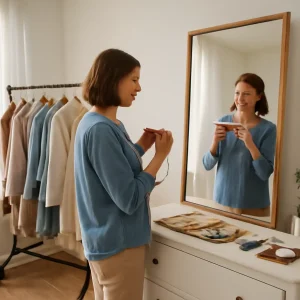
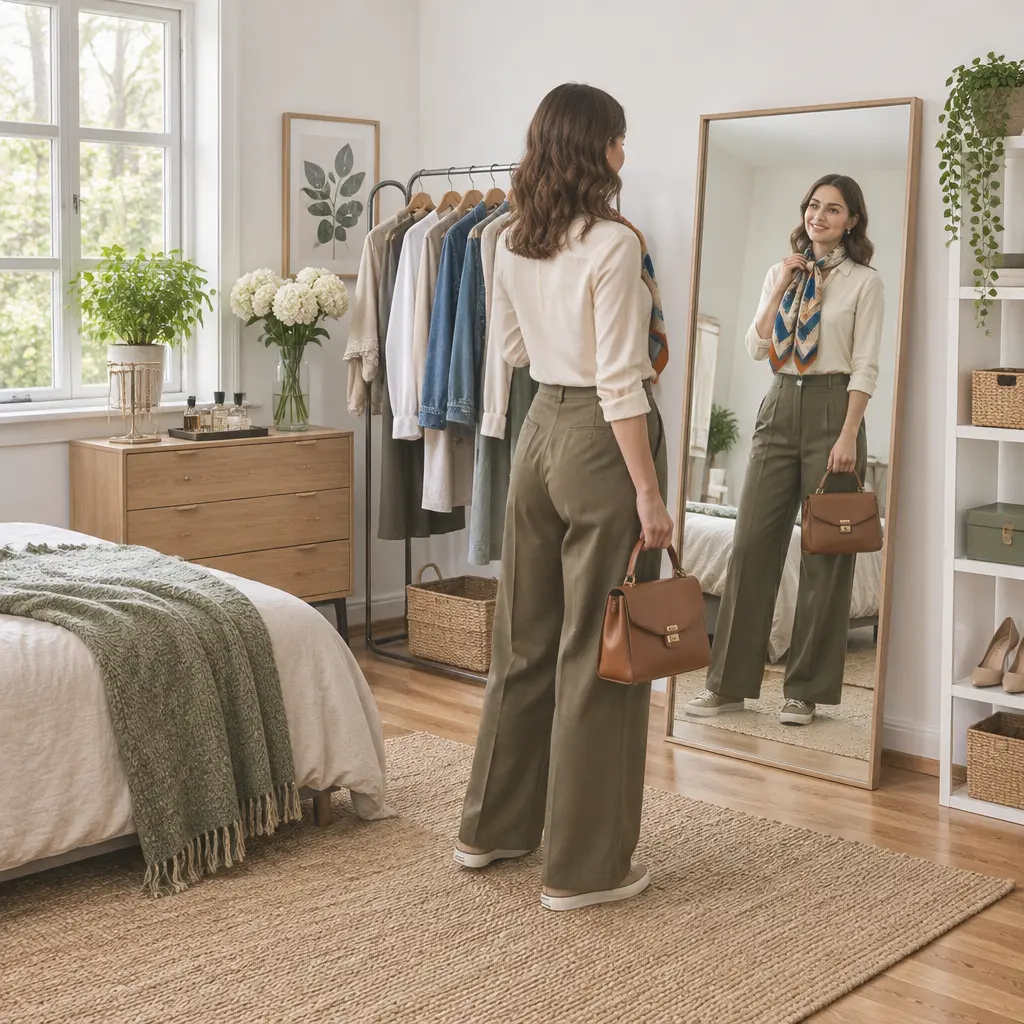
A checklist turns broad style advice into a repeatable decision process. Try the outfit with the accessories, view it in natural light if possible, and remove anything that distracts from the intended focal point. A mirror check from more than one angle can also reveal whether a bag, scarf, or jewelry changes the outfit’s balance in an unexpected way.
- Does each accessory suit the occasion and activity?
- Do the colors relate to the outfit, either through harmony or deliberate contrast?
- Is there one clear focal point, or are several statement pieces competing?
- Are the scale, comfort, and function appropriate for the wearer and setting?
- Can the accessory be worn with other items already in the wardrobe?
Conclusion: Choose Accessories That Support the Whole Outfit
Choosing accessories that complement an outfit comes down to coordinating color and texture, balancing scale, and matching the setting and practical needs. A personal wardrobe plan makes these choices easier by prioritizing versatile pieces and reserving bolder accessories for moments when they add a clear focal point. Start with one outfit you wear often, test a few combinations, and note which pieces feel comfortable and work across multiple occasions. For further exploration, browse museum fashion collections and review your wardrobe before making new purchases.
Sources: U.S. Bureau of Labor Statistics, Consumer Expenditure Surveys, https://www.bls.gov/cex/; Victoria and Albert Museum, Fashion Collection, https://www.vam.ac.uk/collections/fashion; The Metropolitan Museum of Art, The Costume Institute, https://www.metmuseum.org/about-the-met/collection-areas/the-costume-institute; Pantone Color Institute, Color of the Year and Color Trends, https://www.pantone.com/color-of-the-year/