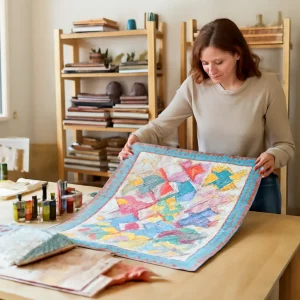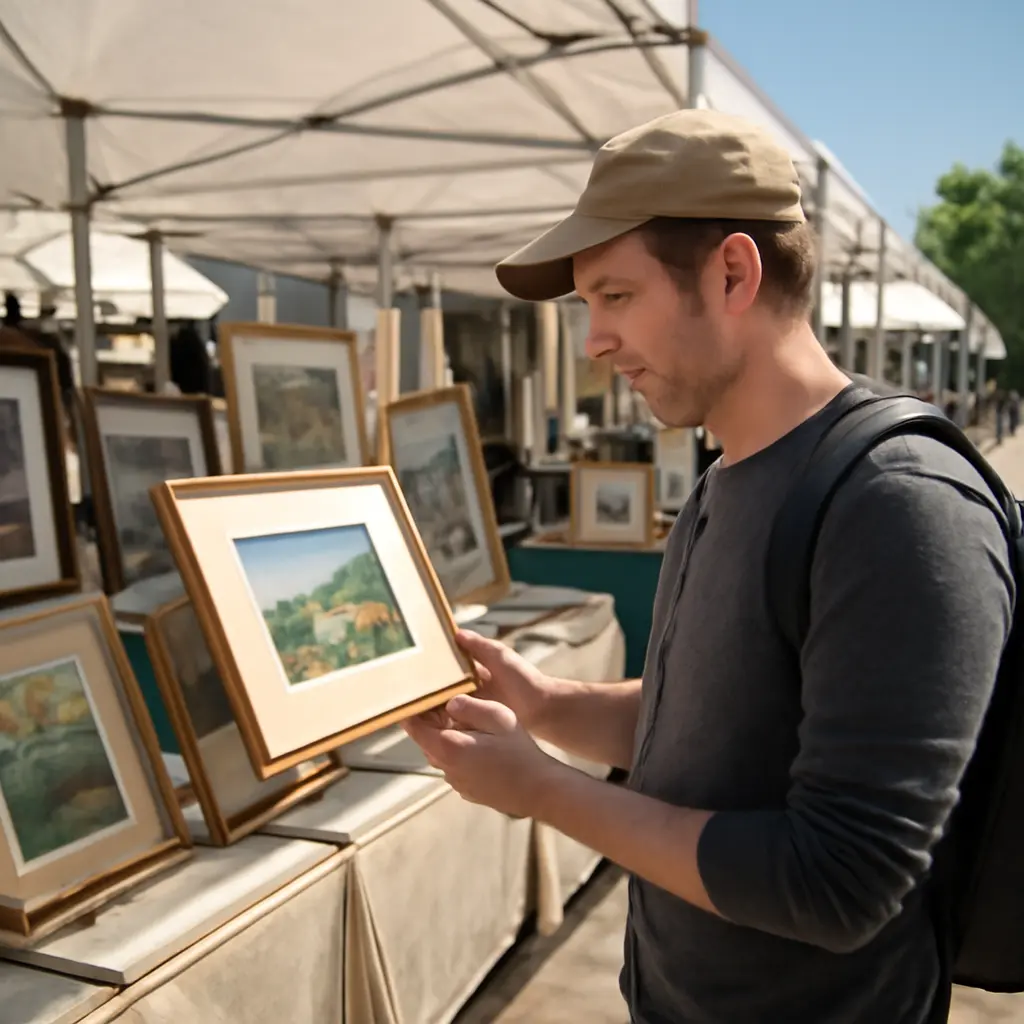
Souvenirs are small objects bought to remember a trip; travel-inspired art turns the experience of place into a considered work for display, study, or collection. The difference is not simply price: it often lies in an artwork’s authorship, materials, originality, documented connection to a place, and the way it fits into a collector’s broader interests. That distinction matters in a global tourism economy: UN Tourism reported an estimated 1.4 billion international tourist arrivals in 2024, creating enormous demand both for travel keepsakes and for art rooted in destinations. Understanding the difference helps travelers buy more thoughtfully, collectors assess provenance and cultural context, and communities retain greater value from the stories their art represents.
Travel-Inspired Art Is Defined by Place, Making, and Meaning
Travel-inspired art is artwork whose subject, materials, production, or cultural context is meaningfully connected to a place encountered through travel. It can include paintings, prints, photographs, sculpture, ceramics, textiles, and artist-made objects. There is no single universal definition used across the art trade; the useful distinction is whether the object has an identifiable maker and a substantial connection to place, rather than serving primarily as a mass-produced reminder of a trip.
That definition includes several related categories: original works made on location, limited-edition prints, locally made craft, contemporary art responding to regional history, and photography documenting a destination. A souvenir can also be art, and a collectible does not have to be expensive. Authorship, evidence of origin, quality of making, cultural significance, and the buyer’s own purpose all help establish how an object should be understood.
Original works and artist-made editions
An original work is created as an individual artwork, while an edition is a planned series of impressions or objects made from a particular design or process. A print, for example, may be numbered and signed by the artist, but edition size and production method affect how it differs from a poster printed in unlimited quantities. The Smithsonian American Art Museum’s collection demonstrates the breadth of art forms through which artists interpret American places and histories, including works on paper, photographs, paintings, and sculpture.
For buyers, practical checks include the artist’s name, the medium, whether the piece is original or part of an edition, and any certificate or receipt. These details do not guarantee future value, but they make the object easier to identify and care for.
Local craft and cultural context
Locally made craft includes objects whose design and production draw on a community’s skills, materials, or traditions. Textiles, ceramics, carving, and jewelry may be functional, decorative, or both. UNESCO’s 2003 Convention for the Safeguarding of the Intangible Cultural Heritage recognizes traditional craftsmanship as an important area of living heritage, emphasizing that knowledge and skills are transmitted within communities rather than residing only in finished objects.
A traveler can support that heritage by asking who made an object, where it was produced, and whether the seller can explain its materials and significance. Respectful purchasing avoids treating culturally important designs as anonymous decoration and helps distinguish community-made work from imports marketed as local.
Photography and place-based art
Travel photography becomes collectible art when a photographer presents images as authored works, often with information about the image, print process, and edition. Place-based art can also examine landscapes, migration, tourism, environmental change, or the relationship between visitors and residents. In these cases, the destination is more than a scenic backdrop: it is part of the artwork’s subject and interpretation.
Collectors Choose Travel-Inspired Art for More Than a Memento
Collectors typically evaluate a work through a combination of personal response and verifiable information. The International Council of Museums’ ethical framework stresses that museums should acquire objects with due diligence around lawful ownership and provenance. Although that framework is written for museums, its core questions are useful for private buyers too: who made the work, where did it come from, and can its history be responsibly explained?
Collectors may seek a visual record of a journey, an artist’s evolving practice, a particular medium, or a connection to a community. Hyponyms within this broader collecting category include destination-based photography, regional painting, travel sketchbooks, contemporary craft, and works by artists encountered during a trip. Each has different considerations, but none needs to be treated as an investment to be worthwhile.
Provenance, attribution, and documentation
Provenance is the documented history of an artwork’s ownership and, where possible, its origin. For a travel purchase, useful records may include a sales receipt, artist or gallery contact information, a title, date, medium, edition details, and photographs of labels or signatures. The Getty Research Institute’s provenance resources explain why ownership histories matter to understanding art and addressing questions of lawful transfer.
Documentation should be proportionate to the purchase. A modest handmade bowl may need only a clear receipt and maker information, while a higher-priced work warrants more complete records and, when appropriate, independent expertise. Buyers should be cautious of claims about rarity or investment returns that are unsupported by verifiable evidence.
Materials, craftsmanship, and care
Materials shape an object’s appearance, durability, transport needs, and conservation requirements. Paper works can be sensitive to light and humidity; textiles may require careful storage; ceramics and sculpture can be vulnerable to impact. The American Institute for Conservation advises that preventive care—including suitable handling, display, and environmental conditions—can reduce damage to cultural objects.
Before buying, ask how the piece was made and whether it needs special packing or care. For international trips, also check customs rules and restrictions relating to protected wildlife, antiquities, and cultural property. A work that is difficult or unlawful to transport is not a good keepsake, regardless of its appeal.
Personal meaning and long-term collecting
A collection becomes coherent when individual purchases connect through a theme, such as a region, an artist, a material, or a recurring subject. Travel can provide that organizing principle: a collector might acquire works from artists met in different cities or build a group around landscapes transformed by tourism. The value may be emotional, scholarly, aesthetic, or financial, but financial appreciation is uncertain and should not be assumed.
A useful test is whether the buyer would still want the work if it never increased in market price. That question keeps the decision grounded in quality, meaning, and the realities of owning and caring for art.
Tourist Souvenirs Differ from Collectible Art in Purpose and Production
A tourist souvenir is generally purchased as an accessible reminder of a journey, often designed for easy transport and broad appeal. A collectible artwork is more often selected for its maker, originality or edition, material quality, cultural connection, or place within a collecting interest. These are tendencies, not rigid categories: a souvenir can be handmade and meaningful, while a collectible can be inexpensive and widely available.
The economic setting helps explain why both markets coexist. UN Tourism’s 2024 estimate of 1.4 billion international arrivals shows the scale of travel and the potential audience for destination goods. The United Nations World Tourism Organization also reported that international tourism receipts reached an estimated US$1.6 trillion in 2024. Those totals describe tourism broadly, not art purchases specifically, but they underline why visitor spending can influence local retail, craft, and cultural economies.
Mass-produced keepsakes
Mass-produced keepsakes are manufactured in quantity and commonly use familiar destination symbols, such as landmarks, flags, or place names. Their low cost and portability make them practical reminders, but the design may have little connection to local makers or production traditions. Buyers seeking a meaningful object can ask whether the item was made in the destination or merely branded there.
Artist-made souvenirs
Artist-made souvenirs occupy a useful middle ground: they may be small, functional, and affordable while still identifying a maker and reflecting local practice. A print from a neighborhood studio or a piece of pottery sold directly by its maker can serve as both keepsake and artwork. Buying directly from artists or reputable local galleries can make it easier to learn about the work and ensure that the creator receives a fair share.
Ethical and community-conscious purchasing
Ethical purchasing considers not only what an object represents, but also how it was made and traded. UNESCO’s cultural-heritage framework places communities and practitioners at the center of safeguarding living traditions. In practice, visitors can favor transparent sellers, ask about maker compensation, avoid objects made from protected species, and be careful with items presented as ancient or sacred without credible documentation.
This is especially important where cultural objects may be subject to export controls or repatriation claims. The International Council of Museums’ Code of Ethics provides guidance on acquisition and due diligence, while national customs and heritage authorities set the legal requirements travelers must follow. When uncertain, choose contemporary work with clear authorship instead of an object whose origin or export status is unclear.
A Thoughtful Travel-Art Purchase Starts with Questions
The following questions help travelers distinguish an ordinary memento from a work they can understand, transport, and enjoy for years:
- Who made the object, and where was it made?
- Is it an original, a signed edition, a craft object, or a mass-produced item?
- What materials and techniques were used?
- Can the seller provide a receipt and accurate details about the work?
- Does the purchase respect local cultural practices and applicable export rules?
- Can the object be safely packed, transported, displayed, and cared for?
For example, a traveler comparing two small landscape prints might find that one is an uncredited, unlimited reproduction, while the other is a signed edition sold by the artist with the title, date, and printing method recorded. The second offers clearer authorship and documentation, though its appeal still depends on the buyer’s taste rather than a guaranteed resale price. A chart comparing authorship, production, provenance, cultural connection, and care needs can make these differences easier to assess before purchase.
Conclusion: Buy the Story, Not Just the Destination Label
Travel-inspired art spans original works, editions, photography, and locally made craft; collectors distinguish these categories through authorship, provenance, materials, cultural context, and personal meaning. Souvenirs and collectible art are not mutually exclusive, but a place-name label alone does not make an object locally made, culturally significant, or valuable. With international tourism reaching an estimated 1.4 billion arrivals in 2024, thoughtful choices can help visitors move beyond generic keepsakes and support artists and communities more directly.
Before your next trip, research local studios and craft traditions, ask sellers clear questions, keep purchase records, and check transport and export rules. The best travel artwork is not necessarily the most expensive: it is a responsibly acquired object whose maker, place, and meaning you can explain.
Sources: UN Tourism, “International tourism recovers pre-pandemic levels in 2024,” https://www.unwto.org/news/international-tourism-recovers-pre-pandemic-levels-in-2024; UN Tourism, “International tourism to reach pre-pandemic levels in 2024,” https://www.unwto.org/news/international-tourism-to-reach-pre-pandemic-levels-in-2024; Smithsonian American Art Museum, Collection, https://americanart.si.edu/art; UNESCO, Convention for the Safeguarding of the Intangible Cultural Heritage, https://ich.unesco.org/en/convention; International Council of Museums, ICOM Code of Ethics for Museums, https://icom.museum/en/resources/standards-guidelines/code-of-ethics/; Getty Research Institute, Provenance Index, https://www.getty.edu/research/tools/provenance/; American Institute for Conservation, Caring for Your Treasures, https://www.culturalheritage.org/about-conservation/caring-for-your-treasures.