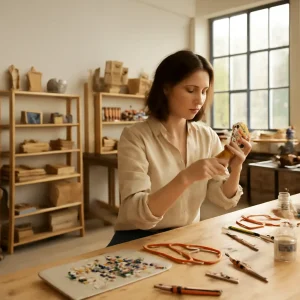
Handmade beaded jewelry is jewelry assembled or embellished by hand using beads—such as glass, stone, metal, or wood—rather than produced entirely through automated mass manufacturing. Finding a quality piece online means evaluating its materials, construction, seller transparency, and fit before buying. These checks matter in a sizable market: the U.S. Census Bureau reported that U.S. retail e-commerce sales reached about $1.19 trillion in 2024, accounting for 16.1% of total retail sales. Because online shoppers cannot handle a piece before purchase, clear photographs, detailed listings, reliable policies, and independent reviews are especially useful. The guide below explains how to assess workmanship and materials, verify sellers, compare listings, and buy with care.
Assessing Quality in Handmade Beaded Jewelry
Quality in handmade beaded jewelry is the degree to which a piece’s materials, assembly, finish, and design suit its intended use and are accurately represented. There is no single universal grading system for handmade beadwork, so buyers must weigh observable details against the seller’s description and policies. The Federal Trade Commission’s Jewelry Guides explain how U.S. sellers should describe precious metals and gemstones, while the FTC’s general advertising principles require claims to be truthful and substantiated. These standards make precise material descriptions more useful than vague terms such as “high quality” or “luxury.”
Related types include seed-bead weaving, stringing, bead embroidery, and wire-wrapped designs. Each uses different construction methods, so the best quality indicators depend on the style: even tension matters in woven work, while secure knots and sturdy findings matter in strung jewelry. Start by matching the listing’s construction details to the piece shown in its photographs.
Materials and Accurate Descriptions
Materials are the beads, thread or wire, clasps, and other components that determine appearance, durability, care needs, and potential sensitivities. A strong listing identifies bead type and relevant finishes—for example, glass, freshwater pearl, sterling silver, plated metal, or a named stone—rather than relying on broad labels. For precious-metal claims, look for clear fineness or plating information; the FTC Jewelry Guides address claims such as “sterling silver” and gold-plated descriptions. If a seller calls beads “natural,” “untreated,” or “genuine,” ask what that means for the specific component and whether the seller can explain its sourcing or treatment.
Photographs can help reveal consistency, but they cannot reliably establish a gemstone’s identity or treatment. Compare close-ups with the written description, and treat unusually valuable material claims without supporting detail as a reason to ask questions—not as proof of authenticity.
Construction and Finish
Construction quality is the strength and neatness of the methods used to join beads and hardware. Inspect close-up images for consistent spacing, smooth edges, secure clasps, tidy thread ends, and even patterns. In bead weaving, loose or irregular tension can distort the design; in strung jewelry, knots between beads or a clearly described wire and clasp can help prevent a break from scattering beads. Ask whether the piece is designed for occasional wear or everyday use, since a delicate thread-based design may require gentler handling than a heavier, reinforced necklace.
There is no reliable universal online test for durability, so do not infer it from polished photography alone. Look for care instructions, repair options, and information about the stringing material. These details connect the visible finish to how the piece is likely to perform over time.
Sizing, Comfort, and Wearability
Wearability is the fit and comfort of a piece in its intended setting. Check necklace length, bracelet circumference, earring dimensions, weight, and clasp type; compare measurements with jewelry you already own. A photo on a model can provide scale, but listed measurements are more dependable. For earrings, confirm the post or hook material if metal sensitivity is a concern, and ask whether the seller can offer a different finding.
Verifying Handmade Beaded Jewelry Sellers and Listings
Seller verification is the process of checking whether a shop provides consistent, specific information and a credible way to resolve problems. The Better Business Bureau’s online shopping guidance encourages consumers to review seller reputation, policies, and payment protections before purchasing. On marketplaces, platform reviews and transaction histories can add context, but they should be read alongside the listing itself. A high rating is useful evidence of past customer experience, not a guarantee that every material claim or future order will be satisfactory.
Shop History, Reviews, and Communication
A dependable seller typically explains who makes the jewelry, what materials are used, how items are produced, and how customers can ask questions. Read recent reviews for repeated themes involving workmanship, sizing accuracy, packaging, shipping, or responsiveness. Give more weight to detailed reviews that describe a specific item than to generic praise, and check whether reviews cover the same product or a different design. Before buying a custom or expensive piece, send a concise question about a material, measurement, or repair; a clear answer helps establish whether the listing meets your needs.
Photographs and Listing Evidence
A useful product listing combines multiple views with close-ups and written specifications. Look for photographs showing the front, back, clasp or earring findings, and the piece beside a familiar scale reference. Images should correspond to the item being sold: handmade work can vary, so ask whether a photograph shows the exact piece or a representative example. The U.S. Federal Trade Commission advises consumers to be cautious about online offers that lack meaningful seller information or appear misleading; for jewelry, unclear images paired with sweeping claims deserve extra scrutiny.
Policies, Shipping, and Payment Protection
Purchase policies explain what happens if a piece arrives damaged, differs materially from its description, or does not fit. Before checkout, find the return window, custom-order cancellation rules, shipping cost, delivery estimate, and process for reporting a problem. Keep the listing and seller messages for your records. Pay through the marketplace or a recognized payment method with applicable dispute procedures; avoid requests to move payment outside the platform, since doing so may reduce access to platform protections. Policies vary by seller and service, so read the terms that apply to the specific transaction.
Comparing Handmade Beaded Jewelry Before Buying
Comparison shopping means evaluating similar pieces on more than price. Compare materials, dimensions, construction, customization, care requirements, and seller policies side by side. A lower price may reflect smaller beads, plated rather than solid metal findings, simpler construction, or a different production method; it does not automatically indicate poor quality. Likewise, a high price alone does not verify craftsmanship or material authenticity.
Price, Craft, and Value
Value is how well a piece’s materials, labor, design, and service match its price and the buyer’s priorities. Handmade jewelry can require considerable time for bead selection, patterning, weaving, finishing, and quality checks. Consider whether the seller explains the process and whether the design’s complexity is visible in the finished work. Compare pieces with similar materials and dimensions rather than treating all beaded jewelry as interchangeable.
Customization, Care, and Repair
Customization can include changes to length, color, clasp, or earring findings, while care guidance explains how to protect the materials. Ask for a written confirmation of custom specifications before paying. Follow the seller’s care instructions and avoid exposing jewelry to water, perfume, or household chemicals unless the materials are stated to tolerate them. If the piece is intended as a long-term purchase, ask whether the maker offers restringing, repairs, or replacement components; these services can extend its useful life.
A Practical Online Buying Checklist
Use this checklist to turn the quality criteria into a consistent purchasing decision:
- Confirm the bead, thread or wire, clasp, and metal descriptions are specific.
- Check measurements, weight where provided, and how the piece is meant to fit.
- Inspect several images, including close-ups of joins and findings.
- Read recent, item-specific reviews and note recurring concerns.
- Review returns, custom-order terms, delivery estimates, and payment protections.
- Ask the maker about any unclear material, construction, or care claim before ordering.
- Save the listing and order confirmation until the item arrives and has been inspected.
For example, imagine comparing two handmade seed-bead bracelets. One listing gives the bead material, bracelet circumference, clasp type, close-up images, care instructions, and a clear return policy. The other offers only a styled photograph and the phrase “premium beads.” The first listing gives the buyer more verifiable information, even if its price is higher; the second requires follow-up questions before a sound comparison is possible.
A simple comparison chart can help: list each candidate in a column and score material clarity, construction evidence, fit information, seller history, and policies. This is a decision aid, not a formal industry grading system, and it helps reveal which unknowns should be resolved before checkout.
Conclusion: Buy Handmade Beaded Jewelry with Confidence
Finding quality handmade beaded jewelry online depends on assessing materials and construction, checking fit and finish, verifying the seller, and comparing policies as well as price. Clear photographs and specific descriptions provide evidence, while reviews and platform protections offer additional context; neither replaces careful reading or direct questions. Before buying, identify your priorities, confirm the details that matter, and keep a record of the listing. For further guidance, consult the FTC’s Jewelry Guides and your marketplace’s current purchase-protection terms.
Sources: U.S. Census Bureau, Quarterly Retail E-Commerce Sales, Fourth Quarter 2024, https://www.census.gov/retail/mrts/www/data/pdf/ec_current.pdf; Federal Trade Commission, Guides for the Jewelry, Precious Metals, and Pewter Industries, https://www.ecfr.gov/current/title-16/chapter-I/subchapter-B/part-23; Federal Trade Commission, Advertising and Marketing Basics, https://www.ftc.gov/business-guidance/advertising-marketing; Better Business Bureau, Online Shopping, https://www.bbb.org/all/online-shopping