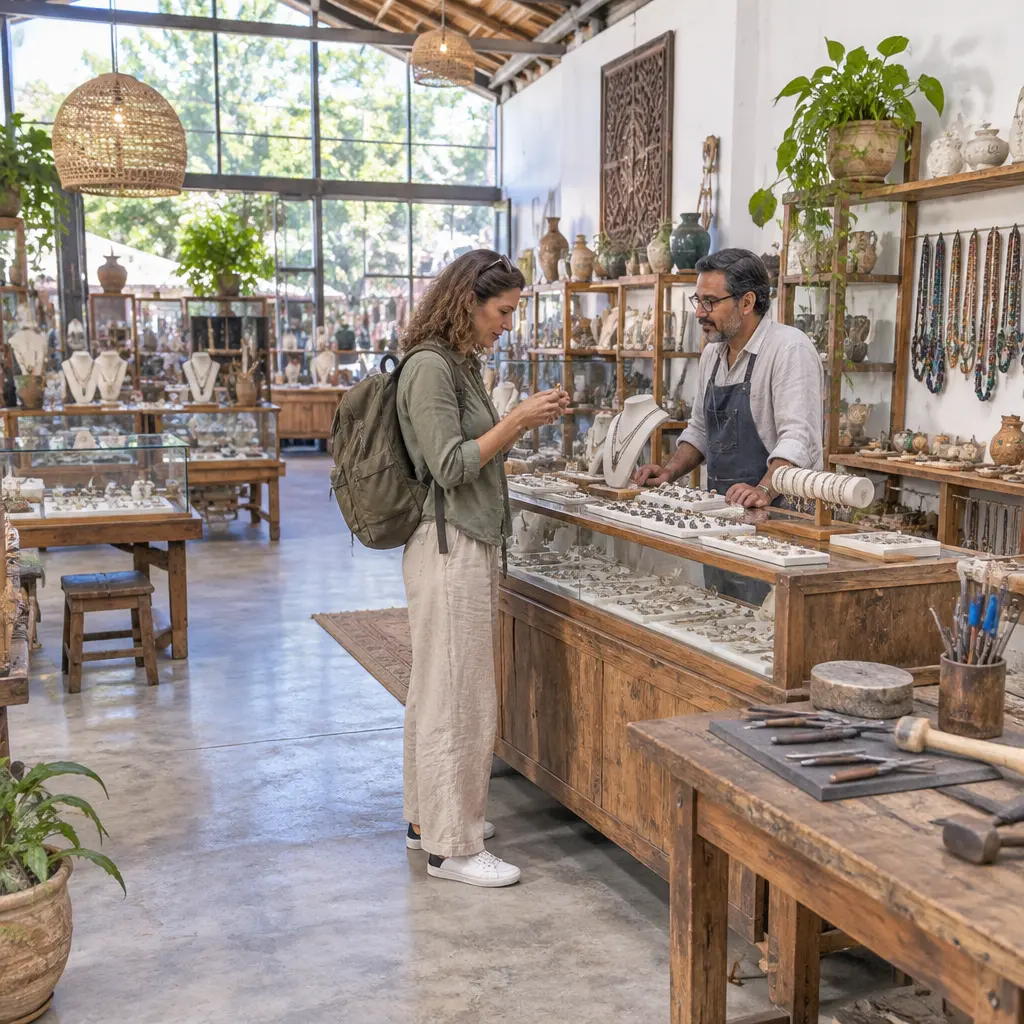
Jewelry buying while traveling is the process of choosing and purchasing wearable items away from home, often combining personal style, local craftsmanship, and souvenirs. A smart purchase starts with researching local prices and consumer protections, then checking materials, workmanship, documentation, and import rules before paying. These steps matter because jewelry can be costly, difficult to authenticate, and subject to customs duties; the Federal Trade Commission (FTC) advises buyers to understand what metal and gemstone descriptions mean, while U.S. Customs and Border Protection (CBP) requires travelers to declare applicable purchases when returning to the United States.
Plan Jewelry Purchases Before You Travel
A travel jewelry purchase is easier to evaluate when you set a budget and decide what you want before browsing. The Gemological Institute of America (GIA) explains that gemstone value depends on multiple factors, including a stone’s identity and quality; appearance alone does not establish authenticity or price. Research typical local prices, exchange rates, and sales taxes, and compare several reputable sellers rather than treating a tourist-area discount as proof of value.
Choose a budget and purpose
Decide whether you are shopping for a keepsake, a regularly worn piece, or a significant gemstone purchase. Set a maximum price in your home currency and account for card fees, currency conversion, tax, shipping, insurance, and possible customs charges. For a high-value item, consider whether you can obtain an independent appraisal after purchase and whether the cost of doing so makes sense.
Research local styles and seller reputation
Local designs can make a piece meaningful, but tradition or origin claims should be verifiable. Ask how the item was made, where its materials came from, and whether the seller provides a dated receipt and written return terms. Check a store’s established business details and independent reviews; be cautious if a seller pressures you to buy immediately or will not provide documentation.
Verify Jewelry Materials and Quality While Traveling
Verification means checking that the item’s stated metal, gemstone, treatment, and construction match the seller’s description. The FTC’s Jewelry Guides explain that marketers should accurately describe precious-metal content and gemstone treatments. A stamp or certificate can help, but neither should be treated as conclusive without considering who issued it, what it covers, and whether the item can be matched to the paperwork.
Check precious-metal marks
Gold fineness marks, such as 750 for 18-karat gold, express the proportion of pure gold in an alloy; silver marks may similarly indicate fineness. Marking conventions differ by country, and a stamp is not a substitute for a seller’s written description or a reliable test. Ask for the metal type, fineness, item weight where relevant, and any applicable hallmark or assay documentation.
Understand gemstone identity and treatment
A gemstone description should identify the stone clearly and disclose treatments that affect its appearance or care. The GIA distinguishes natural gemstones from laboratory-grown stones and simulants, which may look similar but are different categories. For a costly stone, request a report from a recognized gemological laboratory and confirm that the report’s identifying details correspond to the stone being sold.
Inspect construction and ask for paperwork
Look for secure settings, even finishes, sturdy clasps, and signs of repair or wear. Ask for an itemized receipt describing the piece, materials, price, and seller; retain certificates, warranties, and return-policy documents. Photograph the jewelry and paperwork separately, and store copies securely while keeping the original documents with your travel records.
Compare Prices and Choose a Safe Seller
A fair price is one that makes sense for the documented materials, craftsmanship, and comparable local offerings—not simply one that has been reduced from a claimed “regular” price. Compare like with like: metal fineness, gemstone type and quality, weight, setting, and included services. Ask whether the quoted price includes taxes and whether the seller accepts returns or provides repair support.
Avoid high-pressure sales and misleading bargains
Be wary of claims that an offer is available only for a few minutes, that a stone has guaranteed investment returns, or that a certificate proves a particular resale value. A laboratory report generally describes gemological characteristics; it is not a promise of future price. If the purchase is expensive, pause, compare offers, and seek an independent opinion before committing.
Pay securely and preserve proof of purchase
Use a payment method that provides a clear transaction record, and verify the amount and currency before authorizing payment. Avoid carrying more cash than necessary. Keep receipts and card records because they can help with returns, insurance, customs declarations, or a dispute, though protections vary by issuer, jurisdiction, and transaction type.
Pack, Insure, and Declare Jewelry Correctly
The purchase is not complete until you can transport it safely and comply with the rules that apply to your journey. CBP says returning U.S. residents must declare items acquired abroad, including purchases, and that duty treatment depends on factors such as the traveler’s circumstances and applicable allowances. Rules differ by country, so check the destination and home-country customs authorities before traveling.
Keep valuable pieces in carry-on luggage
Pack valuable jewelry in your personal item or carry-on rather than checked baggage, and avoid displaying it unnecessarily in transit. Keep documentation accessible but separate from the jewelry itself. For a high-value purchase, confirm airline and insurer terms: coverage for jewelry may be limited, and standard travel policies may exclude or cap valuables.
Review customs, tax, and restricted-material rules
Before buying, check whether import duties, value-added tax refunds, or declarations apply. Some materials and wildlife-derived products may face restrictions under national laws or international conservation rules, including the Convention on International Trade in Endangered Species of Wild Fauna and Flora (CITES). Do not buy items made from protected species unless their legality and required permits are clear.
Document the purchase for insurance
For a significant purchase, ask your insurer what evidence is needed to add the piece to a policy. An appraisal, clear photographs, a detailed receipt, and a gemological report can help establish what you own and its stated characteristics. These records do not guarantee coverage or reimbursement; policy limits, exclusions, and valuation methods control.
A Practical Travel Jewelry Buying Checklist
Use this sequence to reduce avoidable risk:
- Set a spending limit and research local price ranges and exchange rates.
- Compare reputable sellers and ask about return terms before purchase.
- Confirm metal fineness, gemstone identity, treatments, and workmanship in writing.
- Obtain an itemized receipt and any relevant certificate or laboratory report.
- Pay securely, retain transaction records, and photograph the item and documents.
- Check customs, tax, and material restrictions for every country on your itinerary.
- Carry valuable jewelry securely and confirm insurance coverage.
Conclusion: Buy Jewelry While Traveling with Confidence
Buying jewelry while traveling can connect a lasting keepsake with a place and its craft, but a memorable purchase should also be a well-documented one. Research prices, verify materials and gemstone claims, choose a reputable seller, keep proof of purchase, and check customs and insurance requirements before you go. Take time to compare options, and consult official consumer, gemological, and customs guidance when a purchase is valuable or involves restricted materials.
Sources: Federal Trade Commission, Guides for the Jewelry, Precious Metals, and Pewter Industries, https://www.ftc.gov/legal-library/browse/rules/guides-jewelry-precious-metals-pewter-industries; Gemological Institute of America, Gem Encyclopedia, https://www.gia.edu/gem-encyclopedia; U.S. Customs and Border Protection, Know Before You Go, https://www.cbp.gov/travel/international-visitors/know-before-you-visit; Convention on International Trade in Endangered Species of Wild Fauna and Flora, What is CITES?, https://cites.org/eng/disc/what.php