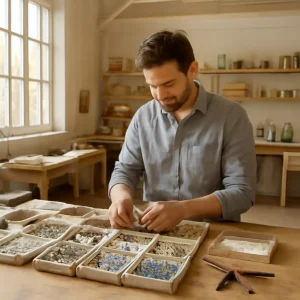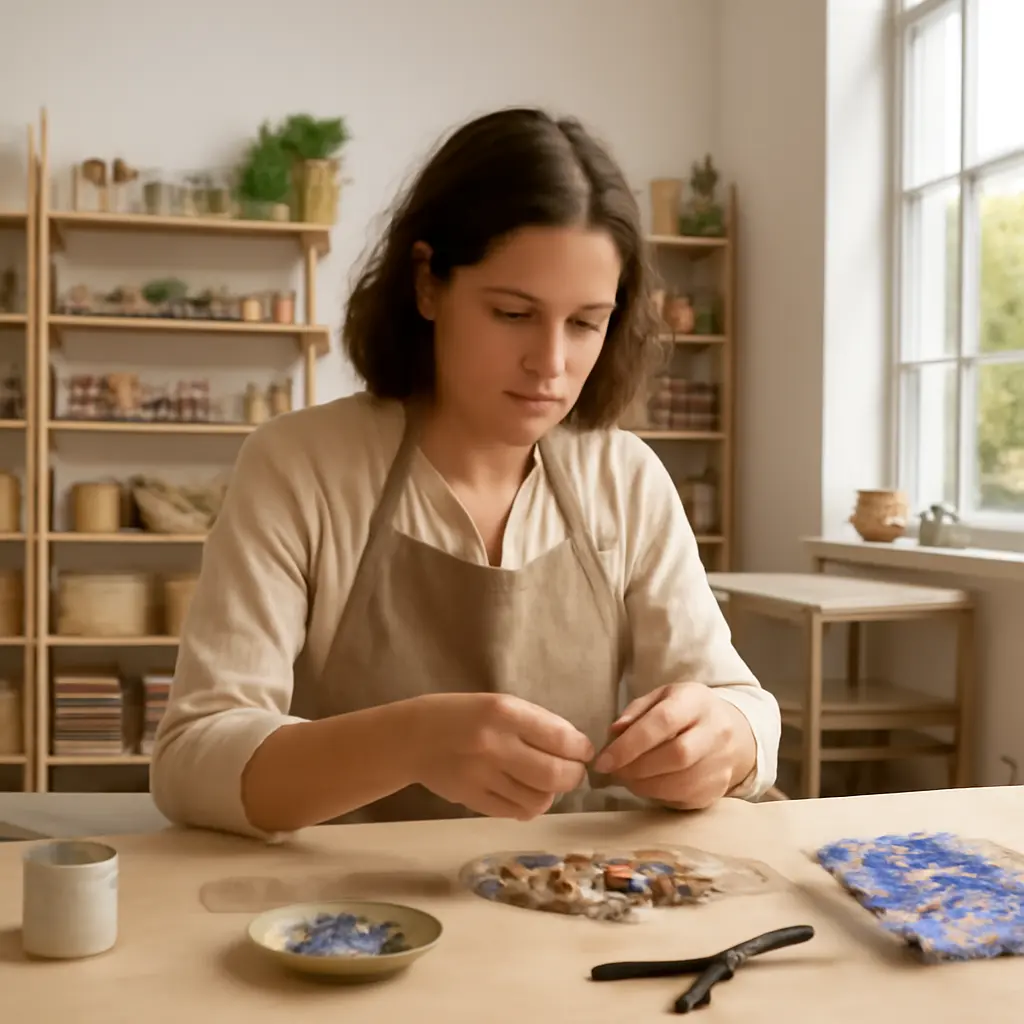
Handmade beaded jewelry can develop a distinctive, personal patina because it is assembled from individual beads, threads, knots, and findings that respond differently to wear. Unlike factory jewelry, which is often designed for uniformity and repeatable finishes, a handmade piece may soften, shift, or show small signs of use that become part of its character—provided its materials are cared for. The difference is not that handmade jewelry automatically lasts longer: durability depends on materials and construction. Rather, thoughtful bead choices, repairable techniques, and visible signs of use can make aging feel like part of the piece’s story. The Smithsonian’s conservation guidance on objects made from mixed materials and the Gemological Institute of America’s care advice both underscore how light, chemicals, abrasion, and storage affect jewelry over time.
Handmade Beaded Jewelry Develops Character Through Material and Construction
Handmade beaded jewelry is jewelry assembled by hand from discrete beads and connecting materials, such as thread, wire, cord, or metal findings. Its aging is the gradual change in appearance or performance caused by wear, exposure, and maintenance. The American Institute for Conservation describes preventive conservation as managing environmental conditions and handling to reduce deterioration; that principle applies to beaded pieces because their beads, stringing, and fittings may not age at the same rate.
The key distinction from factory jewelry is not simply “handmade versus mass-produced.” It is the potential for variation in materials, construction, and repair. A handwoven glass-bead necklace, a knotted gemstone strand, and a wire-wrapped pendant each have different wear points. Their shared feature is that the construction is often visible and may be understood well enough to maintain or repair. By contrast, factory pieces may use proprietary components, plated finishes, or assembly methods that are difficult to reproduce. Neither category is inherently superior; design and care determine how well either one ages.
Material choice shapes the patina
Patina is a surface change that develops through time and exposure. On jewelry, it may mean a gentle softening of a metal finish, a change in the sheen of wood or natural materials, or slight surface wear that records handling. Glass and ceramic beads generally retain their color well, but coatings, foils, and delicate finishes can abrade. Pearls and some other organic materials are more sensitive to cosmetics, perspiration, and chemicals. The Gemological Institute of America advises that pearls should be protected from substances such as perfume and hairspray and wiped with a soft cloth after wear.
Metal components also differ. Solid precious metals can usually be cleaned and serviced repeatedly, while plated metal may lose its surface layer with friction and time. Copper and silver can tarnish through reactions with the environment; some owners value this changing surface, while others prefer to polish it. The U.S. National Park Service’s conservation guidance notes that metals can corrode through chemical and environmental interactions, making storage and handling important. For a beaded piece, the metal findings may age differently from the beads and thread, creating a mixed-material appearance rather than a uniform finish.
Construction makes wear visible—and repair possible
Construction describes how beads are connected and secured. Common forms include hand-knotting, bead weaving, stringing on thread or wire, and wire wrapping. Knots between beads can help limit bead-on-bead abrasion and may reduce loss if a strand breaks, depending on how it is made. Woven pieces distribute tension across a pattern, while wire-wrapped designs depend on the strength and shape of individual connections. These techniques produce different kinds of wear, so care should match the construction rather than follow a single rule for all jewelry.
Handmade work can also be easier to mend when its maker or owner knows the materials and technique. A strand may be restrung, a clasp replaced, or a loose connection secured. This does not mean every handmade piece is repairable: adhesives, proprietary parts, brittle thread, or complex designs can complicate restoration. Still, repairability can extend a piece’s useful life and preserve its original materials instead of requiring replacement. The Ellen MacArthur Foundation’s circular-economy framework emphasizes keeping products and materials in use through strategies such as repair and reuse, a principle that fits well with jewelry maintenance.
Handmade Beaded Jewelry Ages Differently Across Its Main Types
The phrase “handmade beaded jewelry” covers several related types, or hyponyms: knotted bead strands, loom- or off-loom-woven pieces, embroidered beadwork, and wire- or cord-strung designs. Each combines materials and structure in a different way. Understanding the type helps explain what changes with wear and which parts deserve inspection.
Knotted strands and gemstone beads
A knotted strand places a knot between some or all beads, commonly to reduce rubbing and keep beads from scattering if the string breaks. Gemstone beads may retain their visual character for many years, but their hardness, surface treatment, and exposure to impact vary. The Gemological Institute of America’s Mohs scale measures scratch resistance, not resistance to breaking; a hard stone can still chip or fracture if struck. Inspect the strand for frayed thread, stretched sections, and loose knots, especially near the clasp where movement and tension concentrate.
Woven and embroidered beadwork
Woven beadwork interlaces thread and beads into a pattern, while bead embroidery attaches beads to a backing or fabric. These structures can develop a softened, flexible feel through handling, but their threads and foundations may be vulnerable to abrasion, moisture, or snagging. The Smithsonian’s National Museum of the American Indian and other museum collections document beadwork as both functional adornment and culturally meaningful art; its significance can therefore extend beyond appearance. When caring for culturally specific or antique beadwork, avoid improvised cleaning and consult a conservator or knowledgeable specialist.
Wire-wrapped and cord-strung designs
Wire-wrapped jewelry uses shaped wire to connect beads or form settings, while cord-strung designs thread beads onto fibers or synthetic cord. Wire can retain its shape, but repeated bending may fatigue it; cord can stretch, fray, or weaken at knots and openings. The Federal Trade Commission’s jewelry guidance distinguishes precious-metal claims and plating descriptions, a useful reminder to check what a component actually is before expecting it to age like solid gold or silver. Examine wire turns for sharp ends and gaps, and check cords for discoloration, stiffness, or thinning.
Everyday Care Helps Handmade Beaded Pieces Age Gracefully
A graceful aging process is not the same as neglect. Regular, gentle care helps preserve the parts that should remain sound while allowing desirable surface changes to develop. The National Park Service and the American Institute for Conservation both emphasize stable storage, careful handling, and reducing exposure to damaging environmental conditions for objects made from varied materials.
Protect pieces from chemicals, moisture, and abrasion
Put jewelry on after applying perfume, hairspray, sunscreen, and cosmetics, and remove it before swimming, bathing, exercising, or household cleaning. These habits reduce exposure to chemicals, perspiration, and moisture that can affect beads, coatings, thread, and metal. Store each piece separately in a soft pouch or compartment to limit tangling and scratches. For delicate organic beads, plated components, and textile-based beadwork, avoid ultrasonic cleaners and harsh polishing compounds unless a qualified professional confirms they are suitable.
Clean gently and inspect before damage spreads
For many pieces, a soft, dry cloth is a safer starting point than a chemical cleaner. If a component needs more than dusting, identify the bead and metal materials first and follow maker or specialist instructions. After wearing a strand, check the clasp, knots, thread, and bead holes. Early repair of a loose clasp or frayed section may prevent a break and the loss of beads that are difficult to replace.
Choose repair and reuse when practical
Repair can preserve both the object and its personal history. A jeweler or beadwork specialist may be able to restring a necklace, replace a worn clasp, or stabilize a damaged connection while retaining original beads. Before commissioning work, ask whether the repair will alter the piece’s appearance, whether original materials can be reused, and how the repair affects future maintenance. This approach turns visible age into a reason for thoughtful care rather than automatic disposal.
Why the Difference Matters: Personal History, Craft, and Longevity
A handmade piece can feel more individual as it ages because its small variations and signs of use remain legible: a softened cord, a carefully replaced clasp, or beads collected across different trips. These qualities are not measurable durability guarantees, and a poorly made handmade item may wear out sooner than a well-engineered factory piece. The more useful comparison is between replaceable and maintainable design. Materials that can be identified, components that can be accessed, and techniques that can be repaired offer a practical path to longer use.
The wider context is significant. The United Nations Environment Programme has identified textiles and fashion as a major global environmental pressure, while the Ellen MacArthur Foundation advocates circular systems that keep products in use. Jewelry is only one part of that discussion, and these sources do not quantify the environmental benefit of an individual beaded necklace. Still, choosing durable materials, wearing pieces for longer, and repairing rather than replacing them are consistent with broader efforts to reduce waste and value skilled making.
Conclusion: Let Handmade Beaded Jewelry Age with Care
Handmade beaded jewelry can age beautifully because material variation, visible construction, and repairable details allow wear to become part of its character. Knotted strands, woven beadwork, embroidered designs, and wire- or cord-strung pieces each have distinct strengths and vulnerabilities. Their longevity depends on the materials, the quality of construction, exposure, and maintenance—not on the handmade label alone.
To help a favorite piece last, learn what its beads and findings are made from, store it separately, keep it away from chemicals and excess moisture, and inspect its thread, wire, and clasp. When it needs attention, seek a repairer familiar with its technique. Caring for handmade jewelry in this way preserves not only its materials but also the craft and memories woven into it.
Sources: American Institute for Conservation, Caring for Your Treasures, https://www.culturalheritage.org/about-conservation/caring-for-your-treasures; Gemological Institute of America, Jewelry Care and Cleaning Guide, https://www.gia.edu/gia-news-research-jewelry-care-cleaning; Gemological Institute of America, Mohs Scale of Mineral Hardness, https://www.gia.edu/gia-4cs-hardness; National Park Service, Museum Handbook, Part I: Museum Collections, https://www.nps.gov/subjects/museums/upload/MHI-2016-Part-I.pdf; Smithsonian National Museum of the American Indian, Native American Beadwork, https://americanindian.si.edu/explore/exhibitions/item?id=971; Federal Trade Commission, Jewelry Guides, https://www.ftc.gov/legal-library/browse/rules/jewelry-guides; Ellen MacArthur Foundation, What Is a Circular Economy?, https://www.ellenmacarthurfoundation.org/topics/circular-economy-introduction/overview; United Nations Environment Programme, Sustainability and Circularity in the Textile Value Chain: Global Stocktaking, https://www.unep.org/resources/publication/sustainability-and-circularity-textile-value-chain-global-stocktaking