Layering beads like a wandering artist means building jewelry intuitively—letting color, texture, shape, and personal meaning guide the arrangement instead of following a fixed pattern. The approach is a creative choice, not a formal craft standard: bead artists can borrow from color theory and basic construction techniques while deliberately varying the rhythm of a strand. There is no reliable industry statistic measuring how many makers work this way, but the practice connects with a well-documented reality of craft: handmade objects can carry personal meaning as well as practical and aesthetic value. Understanding bead materials, visual balance, construction, and responsible sourcing helps make an unplanned design look expressive rather than accidental.
How Intuitive Bead Layering Shapes a Wandering Artist’s Design
A wandering-artist approach to bead layering is an open-ended method of arranging beads in changing combinations, then refining the result by eye and feel. Unlike a strictly repeating sequence, it permits asymmetry, mixed materials, uneven spacing, and unexpected focal points. “Wandering artist” here describes a creative mindset rather than a recognized technical category in jewelry making. The method can still use deliberate principles—such as contrast, repetition, and secure finishing—without making the design appear rule-bound.
Improvisation with a visual anchor
Improvisational layering is the practice of making design decisions as a piece develops. A maker might begin with one striking glass bead, a found pendant, or a favorite color, then choose surrounding beads in response. The anchor gives the composition a point of focus, while irregular accents keep the eye moving. This is similar to improvisation in other arts: choices are spontaneous, but they draw on experience and a working sense of proportion.
A practical way to keep freedom from turning into visual clutter is to repeat one feature—perhaps a color, bead shape, or metal finish—at intervals. The repetition creates a quiet connection between otherwise varied elements. The Smithsonian American Art Museum’s discussion of folk and self-taught art offers useful context for valuing individual expression, although it does not define a specific bead-layering method.
Asymmetry and changing rhythm
Asymmetry means that the two sides of a design differ while still feeling visually balanced. In a necklace, a large focal bead on one side might be counterweighted by a cluster of smaller beads on the other. A bracelet can alternate dense clusters with open stretches, producing a rhythm that feels less predictable than a uniform pattern.
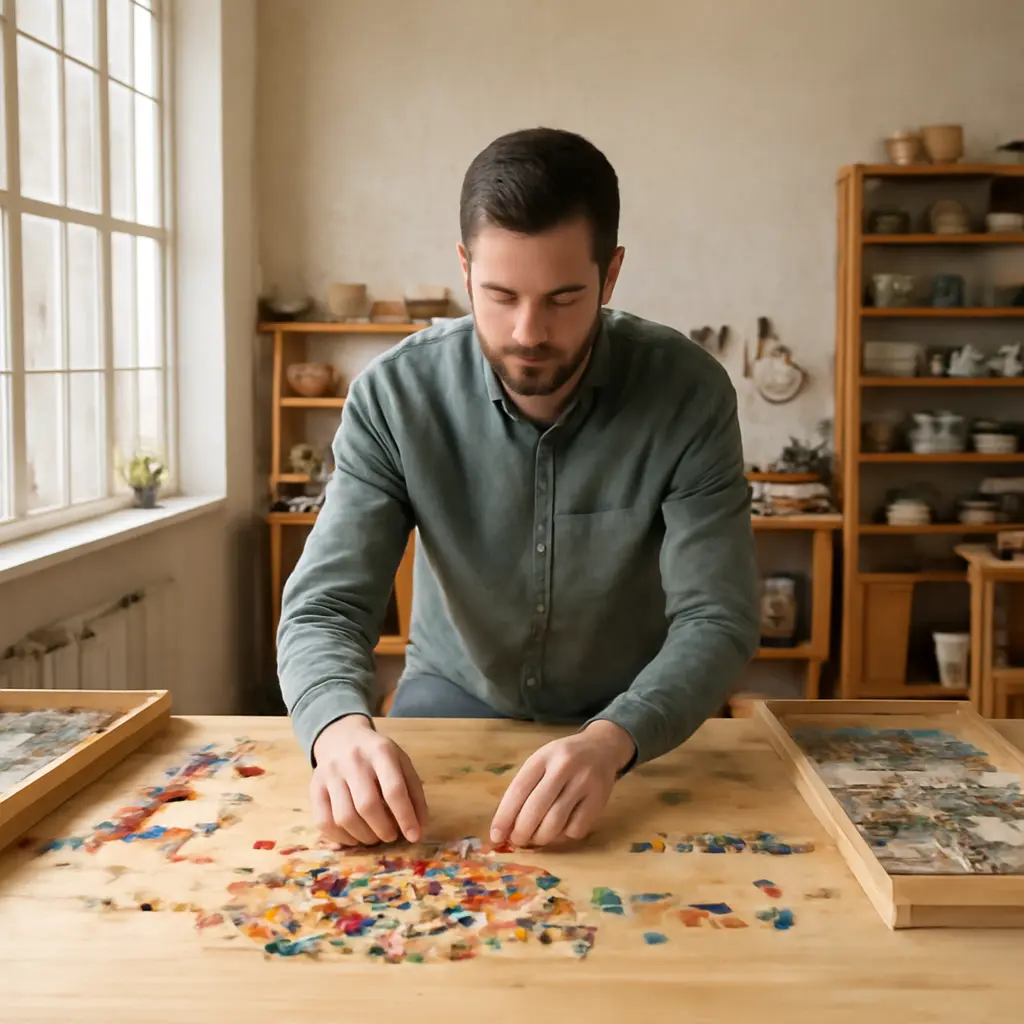
Balance does not require identical halves. Instead, consider the visual weight of color, size, shine, and spacing. A dark, oversized bead often attracts more attention than several small, pale beads, so a maker can test the arrangement on a bead board or lay it out on a neutral surface before stringing. A photograph of the layout can also reveal whether one area dominates unintentionally.
Mixed materials and tactile contrast
Mixed-material layering brings together beads or components with different surfaces and origins: polished stone, matte wood, ceramic, glass, metal, shell, or reclaimed objects. Contrast adds sensory variety and can suggest a story—for example, pairing weathered wood with bright glass to evoke a shoreline or travel memory.
Material choice also affects comfort and durability. The Smithsonian Institution’s National Museum of the American Indian and other museum collections document the broad cultural histories of beadwork, including the use of materials and designs with meanings specific to particular communities. Contemporary makers should avoid treating culturally significant motifs as generic decoration; learning the context and acknowledging sources is part of responsible design.
How Color, Shape, and Scale Guide Bead Layering
Even an intentionally unruly strand benefits from visual decisions. Color, shape, and scale are useful tools because they help a maker judge how each bead relates to its neighbors. These are not laws that every design must obey; they are ways to diagnose why a composition feels cohesive, energetic, or crowded.
Color relationships and contrast
Color relationships describe how hues interact. Complementary colors sit opposite each other on a conventional color wheel and tend to create strong contrast; analogous colors sit near one another and often feel more blended. A wandering design can combine both: use a mostly related palette, then introduce one contrasting bead as a visual spark.
The Pantone Color Institute tracks color trends in fashion and design, but trend forecasts are not rules for handmade work. For a personal piece, test beads together under the light in which the jewelry will usually be seen. Natural daylight, warm indoor lighting, and camera flash can change how colors appear. A simple comparison chart—palette on one axis, bead finish on the other—can help a maker record combinations that work.
Shape, scale, and focal points
Shape and scale determine the physical and visual rhythm of a strand. Round beads can establish a steady baseline; cubes, discs, tubes, and irregular forms interrupt it. A focal point is the area that first attracts attention, often created by a larger bead, a pendant, or a concentrated change in color or texture.
A useful trial is to place the largest or most distinctive element first, then arrange smaller pieces around it. If every bead is equally large and visually striking, the eye may not know where to settle. Conversely, too much repetition can make a freeform piece feel mechanical. Alternating a few substantial shapes with quieter spacers often preserves both clarity and spontaneity.
Layering multiple strands
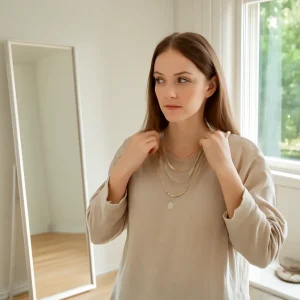
Multistrand layering combines separate necklaces or bracelets—or several rows built into one piece—to create depth. Varying strand length gives each layer room to show, while differences in bead size and density prevent the strands from visually merging. The design can feel improvised while still accounting for movement, tangling, and comfort.
Before finishing, wear or drape the strands together and check how they move. Closely matched lengths are more likely to overlap; a modest difference can improve separation, though the ideal spacing depends on the wearer and garment. For a charted planning aid, record each strand’s length, dominant material, and focal element. This makes it easier to reproduce or repair the combination later.
How Construction and Safety Support Spontaneous Beadwork
Creative freedom works best when the finished object is comfortable and secure. Stringing material, bead-hole size, clasp choice, and finishing technique should match the piece’s weight and intended use. The Consumer Product Safety Commission’s guidance on children’s products is especially relevant when jewelry is designed for or may be used by young children, because small components can present choking hazards.
Choosing stringing materials and findings
Stringing material is the cord, wire, thread, or beading line that holds the design together. Flexible beading wire suits many heavier necklaces, while thread or cord can work well with lighter beads and particular techniques. The bead holes must accommodate the chosen material without excessive friction, and sharp-edged beads may require extra care because they can abrade thread over time.
Findings are the functional components—such as clasps, jump rings, and crimp beads—that close or connect a piece. Test a small sample before committing to an elaborate layout. Pull gently on the completed strand, inspect the closure, and check that beads do not pinch or snag skin. For a long or heavy necklace, a secure clasp and appropriate wire are more important than preserving a perfectly irregular pattern.
Comfort, care, and child safety
Comfort depends on weight, length, edge shape, and how beads sit against the body. Try the piece on, move naturally, and check for sharp edges or components that catch on clothing. Store finished jewelry separately to reduce tangling and surface damage, especially when combining soft materials with metal or stone.
Small beads and detachable components should be kept away from children who may put objects in their mouths. The U.S. Consumer Product Safety Commission describes choking hazards and product-safety requirements for children’s goods; makers selling products should consult the rules that apply to their item and market rather than assume that a handmade label exempts it. Adult jewelry and children’s jewelry should be designed and labeled with their intended users in mind.
How a Wandering Artist Can Build a Layered Piece
A flexible process gives intuition room to work while making practical checks part of the craft. The following sequence is a starting point, not a mandatory pattern; makers can move between steps as ideas emerge.
- Choose an anchor, such as a bead, pendant, color, memory, or material.
- Gather a small range of supporting beads, including at least one contrast in shape, scale, or surface.
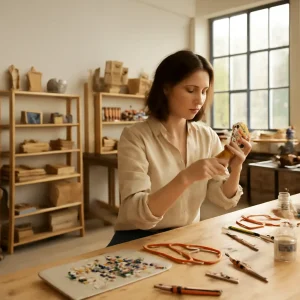
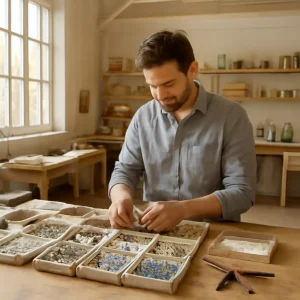
- Arrange the pieces on a bead board or cloth without stringing them immediately.
- Build variation, then repeat one or two features to create visual continuity.
- Photograph the layout and adjust any area that feels too crowded, too empty, or overly heavy.
- Select stringing materials and findings appropriate to the bead weight, hole size, and intended wearer.
- Finish, test the closure, and wear the piece briefly to check movement and comfort.
Real-world inspiration and respectful borrowing
Museum collections provide examples of how beadwork can express identity, history, trade, ceremony, and personal creativity. They also show why there is no single universal “bead style”: techniques and meanings vary across peoples and periods. A contemporary artist can learn from these collections while distinguishing inspiration from direct reproduction, particularly when a pattern or material has community-specific significance.
For a practical study exercise, compare several documented objects and note only observable design features—such as repeated forms, material contrast, or placement of a focal element—before developing an original composition. Record the institution and object context in studio notes. This approach supports both visual learning and cultural care without claiming that a historical design is an anonymous resource.
Conclusion: Let the Beads Wander, Keep the Craft Intentional
Layering beads like a wandering artist means using improvisation, asymmetry, mixed materials, and changing rhythm to make a piece that feels personal. Color, shape, scale, and multiple strands can help organize that freedom, while sound construction, comfort checks, and thoughtful material choices make the result wearable. There is no verified statistic that quantifies this particular design approach, so its value is best understood through the craft decisions and meanings it enables. Start with a small arrangement, experiment with one unexpected contrast, and refine the piece until it feels expressive, balanced, and secure. For further learning, explore museum collections, responsible-material guidance, and hands-on beadmaking resources.
Sources: Smithsonian American Art Museum, Folk and Self-Taught Art collection and resources, https://americanart.si.edu/art/artworks/folk-and-self-taught-art; Smithsonian National Museum of the American Indian, Collections Search, https://americanindian.si.edu/collections-search; Pantone Color Institute, Color Intelligence and Trend Forecasting, https://www.pantone.com/color-intelligence; U.S. Consumer Product Safety Commission, Small Parts Regulations and Choking Hazards, https://www.cpsc.gov/Business–Manufacturing/Business-Education/Business-Guidance/Small-Parts-Regulations; U.S. Consumer Product Safety Commission, Children’s Product Safety, https://www.cpsc.gov/Business–Manufacturing/Business-Education/Business-Guidance/Childrens-Products